
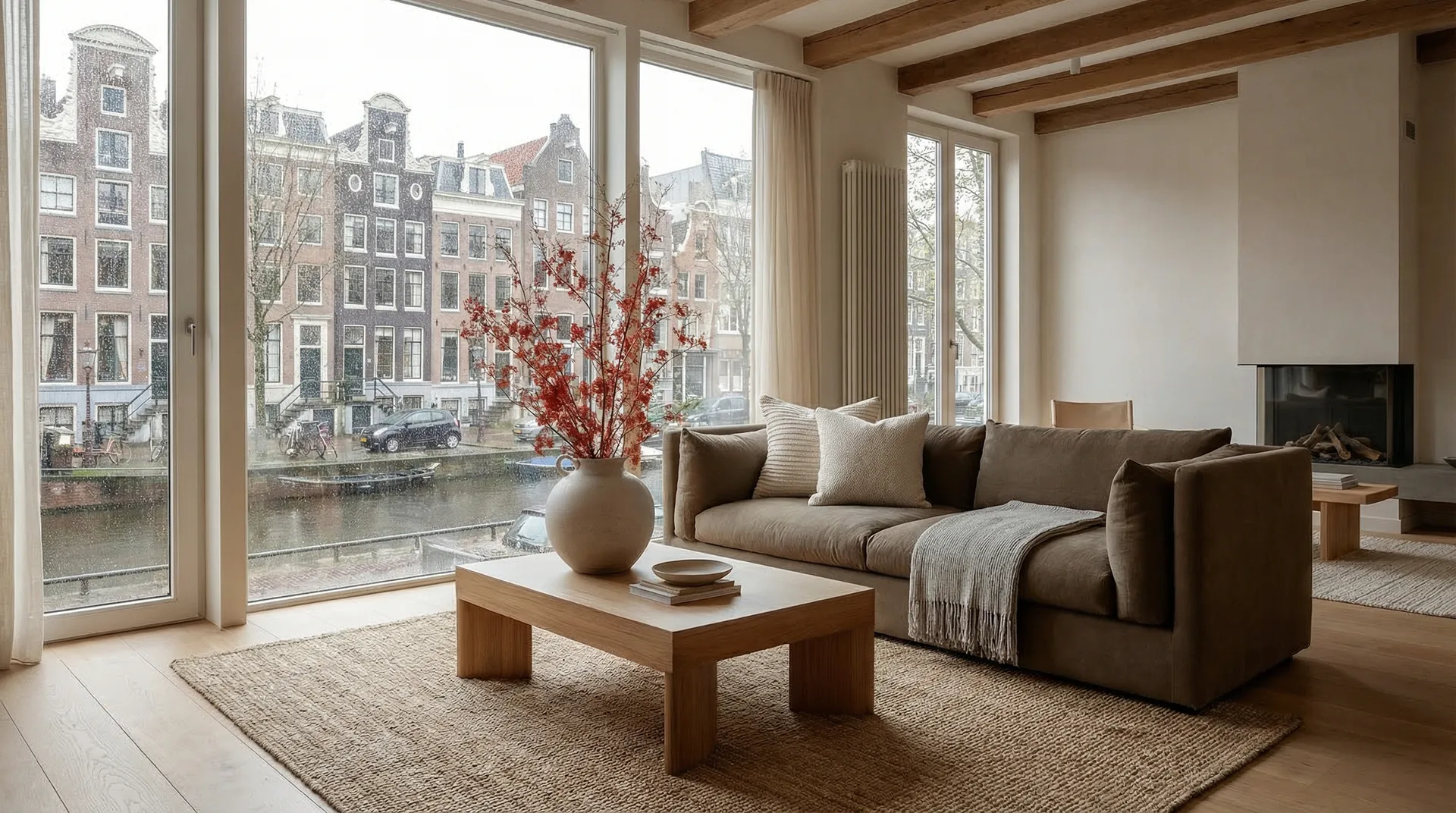
We’ve all been there. You walk into a beautifully renovated, modern living room. The herringbone floors are gleaming, the walls are freshly plastered, and the massive crittall-style windows let in glorious sheets of sunlight. It looks spectacular. But then someone drops a set of keys on the kitchen island, and the sound cracks through the room like a whip. A simple conversation feels like it’s happening in an empty swimming pool.
This is the acoustic paradox of the modern home. We have stripped away the heavy carpets, wood-panelled walls, and layered fabrics of the past in favour of clean, minimalist lines. Aesthetically, it’s a triumph. Acoustically, it’s a disaster.
But you don’t need to sacrifice your design vision to enjoy a peaceful, quiet evening. The solution doesn’t necessarily require complex engineering; often, it lies in the smart application of everyday textiles. By understanding how sound interacts with the objects around us, we can strategically use rugs, curtains, and upholstery to absorb noise, reduce echo, and make our living spaces feel human again.
The Physics of Everyday Noise
To fix a noisy room, it helps to understand what sound actually is. Think of sound waves as invisible, hyperactive bouncy balls. When you speak, watch television, or pull out a dining chair, you are releasing a flurry of these balls into the air.
When a sound wave hits a hard, flat surface, like a concrete ceiling, a polished wooden floor, or a glass pane, it doesn’t stop. It bounces straight back into the room. This reflection is what we hear as an echo or reverberation. In a room with multiple hard surfaces, these waves bounce back and forth endlessly, overlapping and amplifying the noise. This is why a bustling restaurant with minimalist decor can give you a headache within twenty minutes.
Soft materials, on the other hand, act like a sponge. They are porous, made of countless tiny woven fibres with microscopic pockets of air between them. When a sound wave hits a textile, those fibres trap the wave. The energy of the sound vibrates the threads slightly, converting the acoustic energy into a microscopic amount of heat. The wave is absorbed, not reflected.
In Dutch interior design circles, the concept of zachte materialen geluidsabsorptie (sound absorption through soft materials) is becoming a vital part of the planning process. Here is how you can use it to your advantage.
Rugs: Your First Line of Defence
Floors are usually the largest uninterrupted hard surface in any home. Whether you have poured concrete, sleek laminate, or classic oak, your floor is highly reflective.
Laying down a substantial rug is one of the most immediate and effective ways to change how a room sounds. It interrupts the sound wave’s path, catching the noise before it can bounce back up to the ceiling. It’s a design trick so effective that vloerkleed akoestiek verbeteren (improving acoustics with a rug) is a standard search for anyone trying to fix a noisy living room.
But not all rugs are created equal when it comes to acoustics:
- Pile depth matters: A flat-weave cotton rug might look lovely, but it won’t do much for noise. You need depth. High-pile, tufted, or shaggy rugs offer more surface area and deeper fibres to trap sound.
- Material choices: Wool is the gold standard for acoustic absorption. It’s naturally porous and incredibly dense. Synthetic options can work, provided they are sufficiently thick.
- The underlay trick: If you want to supercharge your rug’s acoustic properties, add a thick, felted underlay beneath it. Not only does it make the rug feel luxurious underfoot, but it effectively doubles the sound-absorbing density.
Curtains: Catching Sound Before It Hits the Glass
Modern Dutch homes love large windows, and for good reason–we all want as much natural light as possible. However, glass is highly reflective, particularly at high frequencies such as clinking cutlery, ringing phones, and chattering voices.
If you want to tame the echo in a room with large windows, dressing them correctly is crucial. This is where the concept of gordijnen geluiddempend (sound-dampening curtains) comes into play.
A flimsy, translucent linen blind won’t stop a sound wave. To truly dampen noise, you need mass.
- Heavyweight fabrics: Velvet, heavy chenille, and densely woven wool are excellent choices. Their thick, plush nature acts as an acoustic barrier.
- Lining: Even if you prefer the look of a lighter fabric on the front, lining your curtains with a heavy blackout or thermal material will significantly increase their sound-absorbing capacity.
- Pleats are your friend: A curtain drawn completely flat offers a single surface for sound to hit. A generously pleated curtain (like a wave or pinch pleat) creates deep folds. These folds act like a sound trap, capturing noise from multiple angles. For the best acoustic results, ensure your curtains have plenty of “fullness”–meaning the total width of the fabric is at least double the width of the window.
Upholstery: Why Your Sofa Choice Matters
When furnishing a home, we often debate the merits of leather versus fabric from an aesthetic or practical standpoint (usually concerning spilt wine or pet hair). But your choice of seating has a profound impact on the room’s soundscape.
A leather sofa, while beautiful and durable, has a smooth, taut surface. Acoustically speaking, it acts very much like a wooden floor–it reflects sound. If your room is already echo-prone, a large leather corner sofa will only add to the problem.
Conversely, using stoffen bank akoestiek (the acoustics of a fabric sofa) can instantly soften a room’s noise profile. A large, fabric-covered sofa essentially conceals a massive, foam-filled acoustic panel. The combination of the textured outer fabric and the dense foam or feather filling inside makes it an incredible sound absorber.
If you are committed to leather seating, you must compensate elsewhere. Drape a thick woollen throw over the back, or load it up with textured, heavily stuffed cushions to break up the reflective surface area.
A Harmonious Blend: Top Tips for Interior Acoustics
If you are currently looking for practical interieur akoestiek tips to bring the volume down in your home, here is a quick summary of how to layer your textiles:
- Look up: Don’t forget the ceiling. In exceptionally tall rooms, hanging a fabric tapestry or installing a stretched fabric acoustic ceiling can prevent sound from pooling at the top of the room.
- Soften the dining area: Dining rooms are notorious for bad acoustics. Use an upholstered dining chair rather than bare wood or plastic. Adding a linen tablecloth during dinner parties will also significantly reduce the clatter of plates and glasses.
- Use bookshelves as diffusers: While not a textile, a bookshelf filled with books acts as a fantastic acoustic diffuser. The varying depths and materials of the books break up sound waves and scatter them, rather than reflect them directly back.
When Textiles Aren’t Quite Enough
There are times when decorating alone won’t fix the problem. If you live in an older home with thin, poorly insulated walls, or a highly echoing modern concrete structure, placing a velvet cushion on a chair is a bit like putting plaster on a broken leg. You need structural intervention.
If you are planning a full renovation or extension, this is the time to tackle noise at its source. Retrofitting acoustic ceiling drops, adding specialized sound-dampening plasterboard, or inserting acoustic insulation between floors will fundamentally change how your home feels and sounds.
Navigating structural acoustics requires experience, and it is always best handled by professionals before the finishing touches are applied. If you’re at the planning stage of a major project, consulting with a trusted, expert team like Luckey Construction ensures that these invisible, yet crucial, elements are engineered perfectly from day one.
The Bottom Line
A home should be a sanctuary, not an echo chamber. While architectural trends may lean towards hard surfaces and vast, empty spaces, we as humans still crave environments that feel soft, warm, and acoustically forgiving. By thoughtfully integrating thick rugs, sweeping curtains, and plush upholstery into your spaces, you aren’t just decorating; you are actively shaping the sensory experience of your home.