
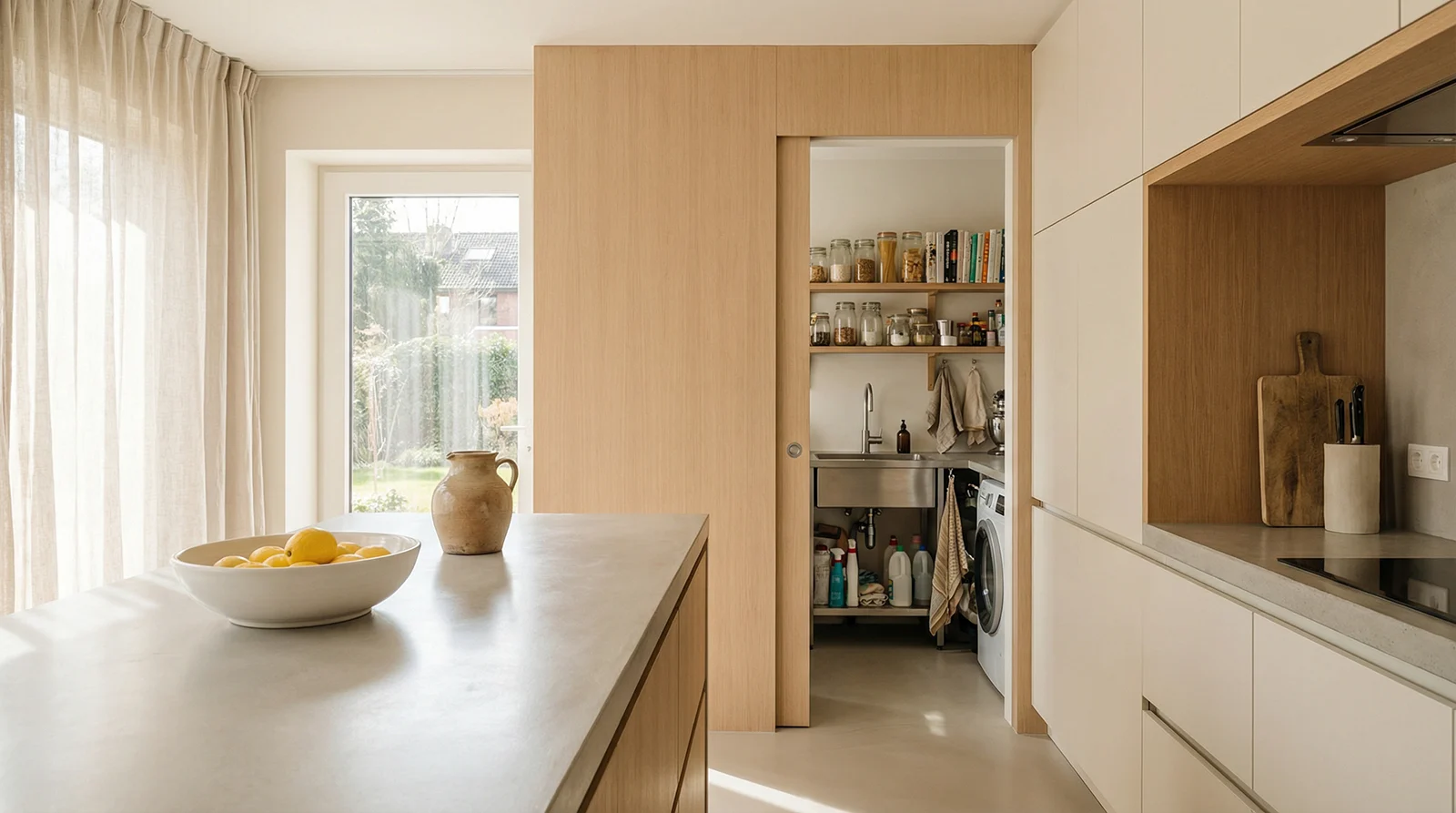
Picture a glossy magazine spread of a contemporary kitchen. The countertops are vast expanses of uninterrupted marble or sleek concrete. There is perhaps a single bowl of organic lemons resting next to a sculptural ceramic vase. It is serene, immaculate, and entirely detached from the reality of daily life.
In real life, kitchens are noisy, messy factories. They generate steam, clattering pots, sticky baking sheets, and overflowing recycling bins. When we tore down the walls of our homes to create the expansive open plan living spaces we all crave, we accidentally invited the chaos of cooking straight into our living rooms. If you are hosting a dinner party, the last thing you want is your guests staring at a towering pile of greasy pans while they sip their wine on the sofa.
This architectural dilemma is exactly why a very traditional concept is making a spectacular return. We are witnessing the revival of the bijkeuken. But this is not the cold, uninsulated utility shed your grandparents used for scrubbing laundry. Today, it has evolved into a highly functional, beautifully designed engine room for the home.
Let us look at why this architectural shift is happening, and how you can integrate this incredibly practical space into your own property.
What is Driving the Scullery Kitchen Trend?
The growing scullery kitchen trend is born out of a desire to reclaim the kitchen as an entertaining space. We have fallen in love with bulky countertop appliances over the last decade. Air fryers, professional grade espresso machines, stand mixers, and blenders are fantastic tools, but they consume an enormous amount of visual space.
By creating a secondary, hidden space, you can banish the clutter. The main kitchen remains a beautiful, minimal area for socializing, pouring drinks, and light assembly. The back room takes on the heavy lifting. It is where the noisy dishwasher runs, where the messy vegetable prep happens, and where the loud spin cycle of the washing machine is muffled behind a closed door.
Planning Your Utility Room Renovation NL Style
If you are considering a ground floor reconfiguration, adding a secondary utility space requires careful thought. You cannot simply throw up a stud wall, add some shelves, and hope for the best. A successful utility room renovation NL relies on intelligent zoning. You need to map out exactly how you live and what frustrates you most about your current setup.
To make the space work, designers usually divide a back kitchen into three distinct zones.
Zone 1: The Wet and Dirty Area
This is the area dedicated to plumbing. You will want a deep, robust sink. Think of a large ceramic Belfast sink or a heavy duty stainless steel basin. This is where you will wash muddy sports boots, soak stained laundry, or clean large roasting tins that refuse to fit in the dishwasher. If you have the space, housing your washing machine and tumble dryer in this zone makes perfect sense. Elevating these machines to waist height is a brilliant design trick that saves you from constantly bending over with a heavy basket of wet clothes.
Zone 2: The Hidden Pantry Dutch Home Concept
Bulk buying and preserving are no longer just for rural living. The modern hidden pantry Dutch home setup is about having ample space to store large quantities of dry goods, big bags of rice, and endless jars of peanut butter. Because this room is hidden from guests, you do not need expensive, closed cabinetry. Open, heavy duty shelving is actually far more practical here. You can see exactly what you have at a glance, making grocery shopping and meal planning significantly easier.
Zone 3: The Appliance Garage and Prep Station
This is the true luxury of a back kitchen. By installing a durable stretch of worktop, you create a permanent home for your ugliest, most cumbersome appliances. You can leave the toaster out permanently. You can keep the food processor plugged in and ready to go. Having a dedicated prep area means you can chop onions, roll out messy pastry, or leave a joint of meat to rest without stressing about wiping down the surfaces immediately.
Brilliant Bijkeuken Renovatie Ideeën for Small Spaces
You might be reading this and thinking it sounds lovely for a sprawling country villa, but impossible for a standard terraced house in Utrecht or Haarlem. However, you do not need twenty square metres to make this work. Even a highly compact space can be transformative if designed with precision.
Here are some clever bijkeuken renovatie ideeën to maximize a modest footprint.
Use Pocket Doors: Traditional doors swing outwards, eating up valuable floor space. Installing a sliding pocket door that disappears into the wall allows you to leave the space open when you are moving back and forth with laundry, and slide it shut when guests arrive.
Invest in Vertical Storage: When floor space is tight, you must build upwards. Run your shelving and cabinetry all the way to the ceiling. Store items you only use once a year, like holiday decorations or massive soup pots, on the very top shelves. Keep a small, stylish step stool folded away nearby for easy access.
Do Not Ignore Ventilation: This is a crucial, frequently overlooked detail. If your hidden room contains a washing machine, a dryer, or a boiling kettle, it will generate a massive amount of moisture. Without a window or a high quality mechanical extraction fan, that moisture has nowhere to go. It will eventually lead to damp, peeling paint, and a musty smell. Always factor proper airflow into your design from day one.
How to Integrate a Back Kitchen Design Netherlands into Your Renovation
Creating a true back kitchen is not a weekend DIY project. It is a complex architectural addition that involves significant structural and technical planning.
If you are carving out space from an existing room or building a small extension to house your new scullery, you are moving major utilities. You need hot and cold water supplies, professional drainage for appliances, and dedicated electrical circuits that can safely handle the load of a tumble dryer, an oven, and a microwave running simultaneously.
Because the technical demands are high, bringing in experienced professionals early in the design phase is vital. When planning a back kitchen design, working with an established building firm makes the difference between a cramped, damp cupboard and a beautifully functioning utility space. The expert team at Luckey Construction understands the precise requirements of modern Dutch properties. They manage the heavy structural alterations, route the complex plumbing, and ensure that your new hidden kitchen is built to handle the rigorous demands of daily life. Having a single team oversee the architectural flow and the technical installations guarantees a finish that is both structurally sound and visually flawless.
The Bottom Line
We place so much pressure on our main kitchens to be visually perfect showrooms. By introducing a secondary, hardworking space into your floor plan, you remove that pressure entirely.
A well designed bijkeuken accepts the messy, noisy, and chaotic reality of running a household. It provides a dedicated place for the chores, allowing your main living area to remain a calm, welcoming environment. It is an investment in your sanity just as much as it is an investment in your property.