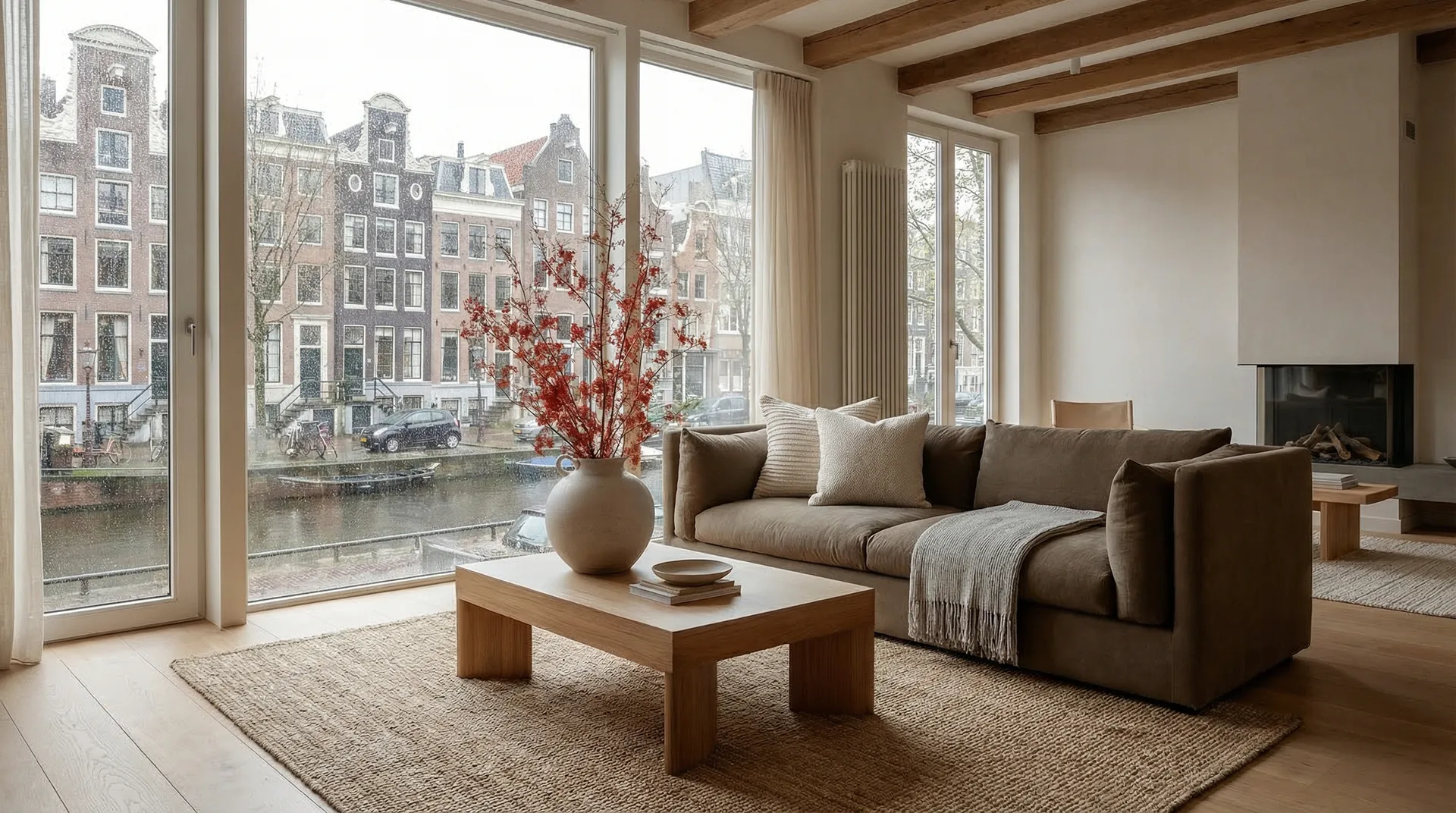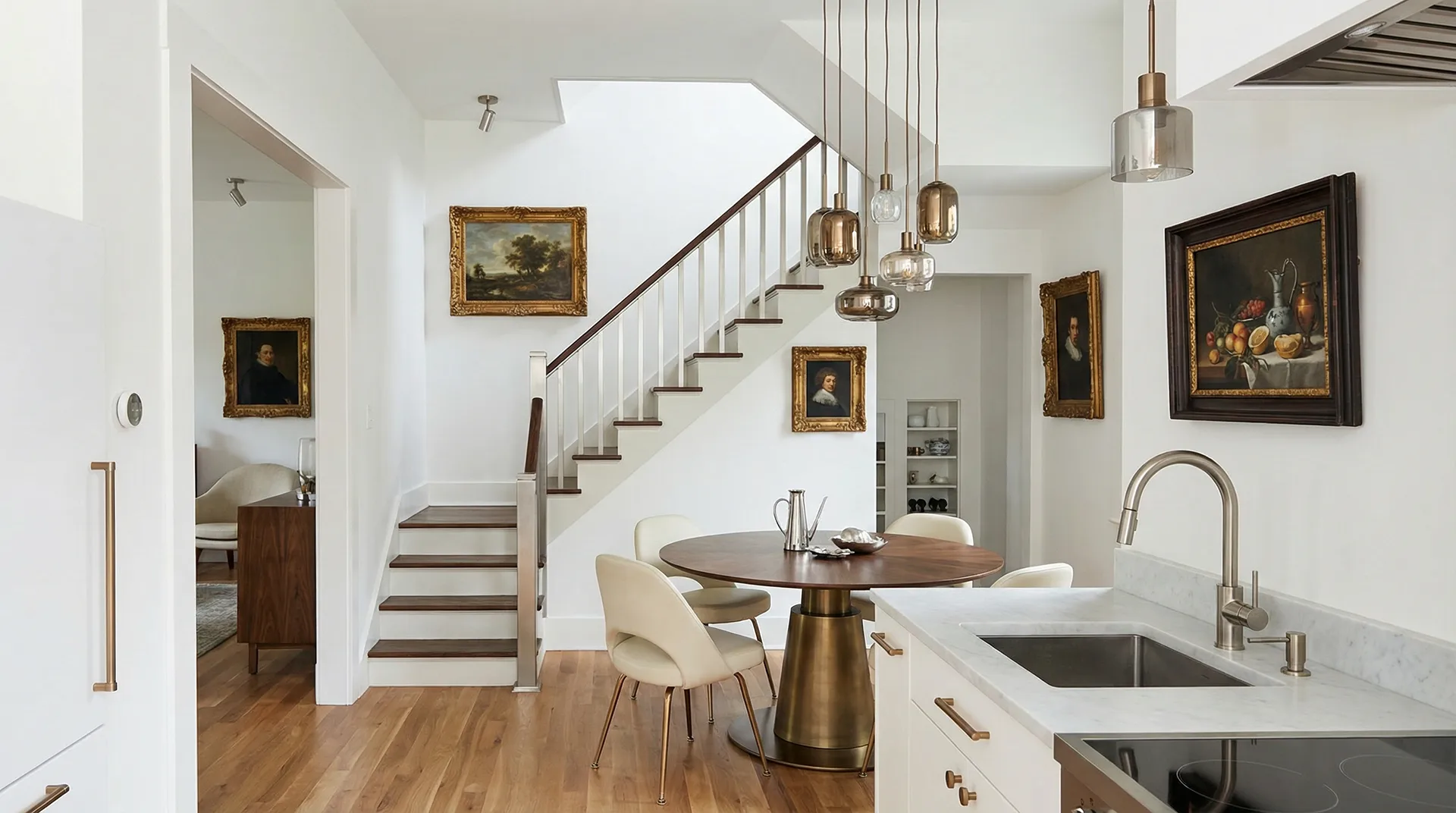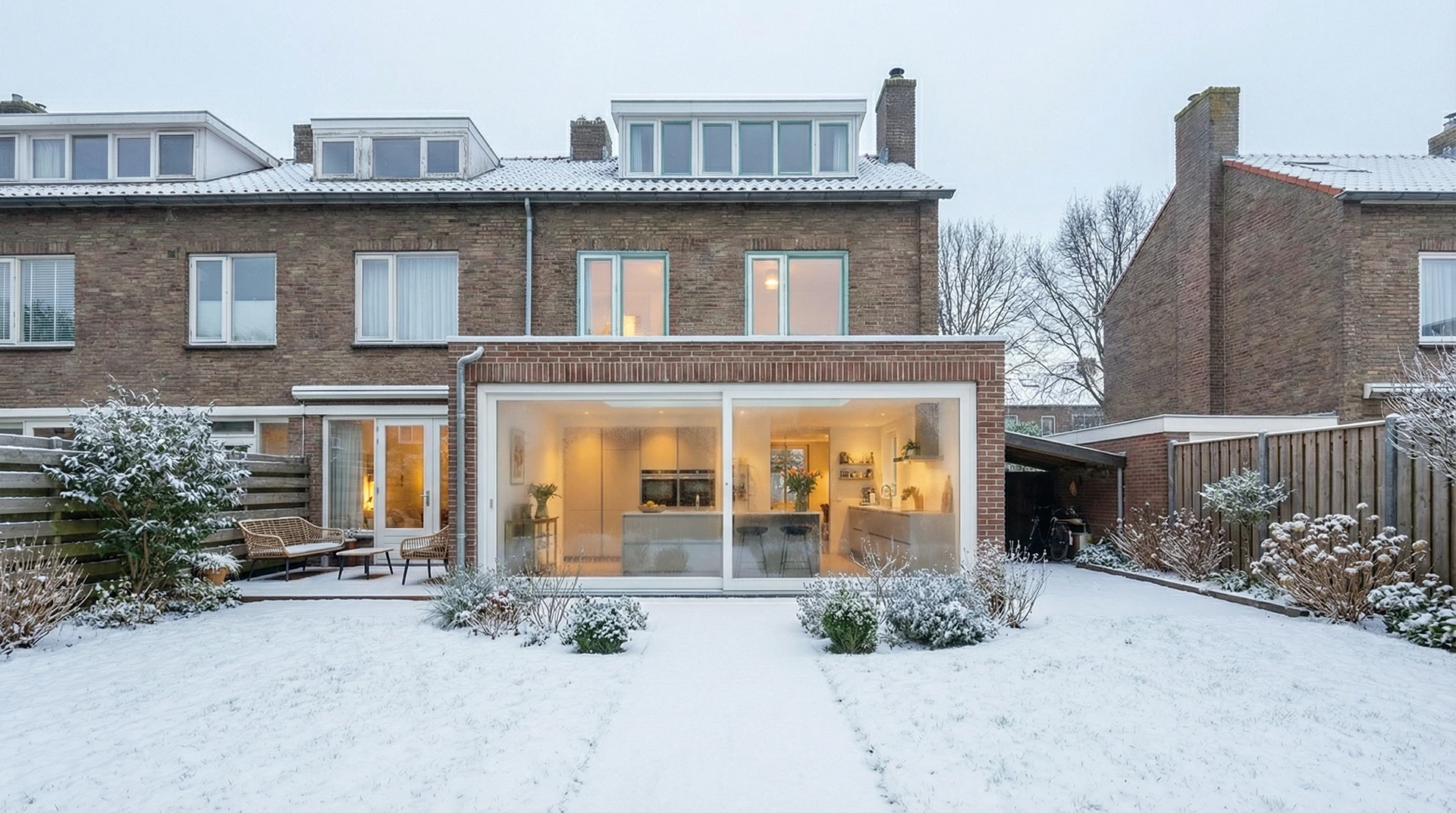


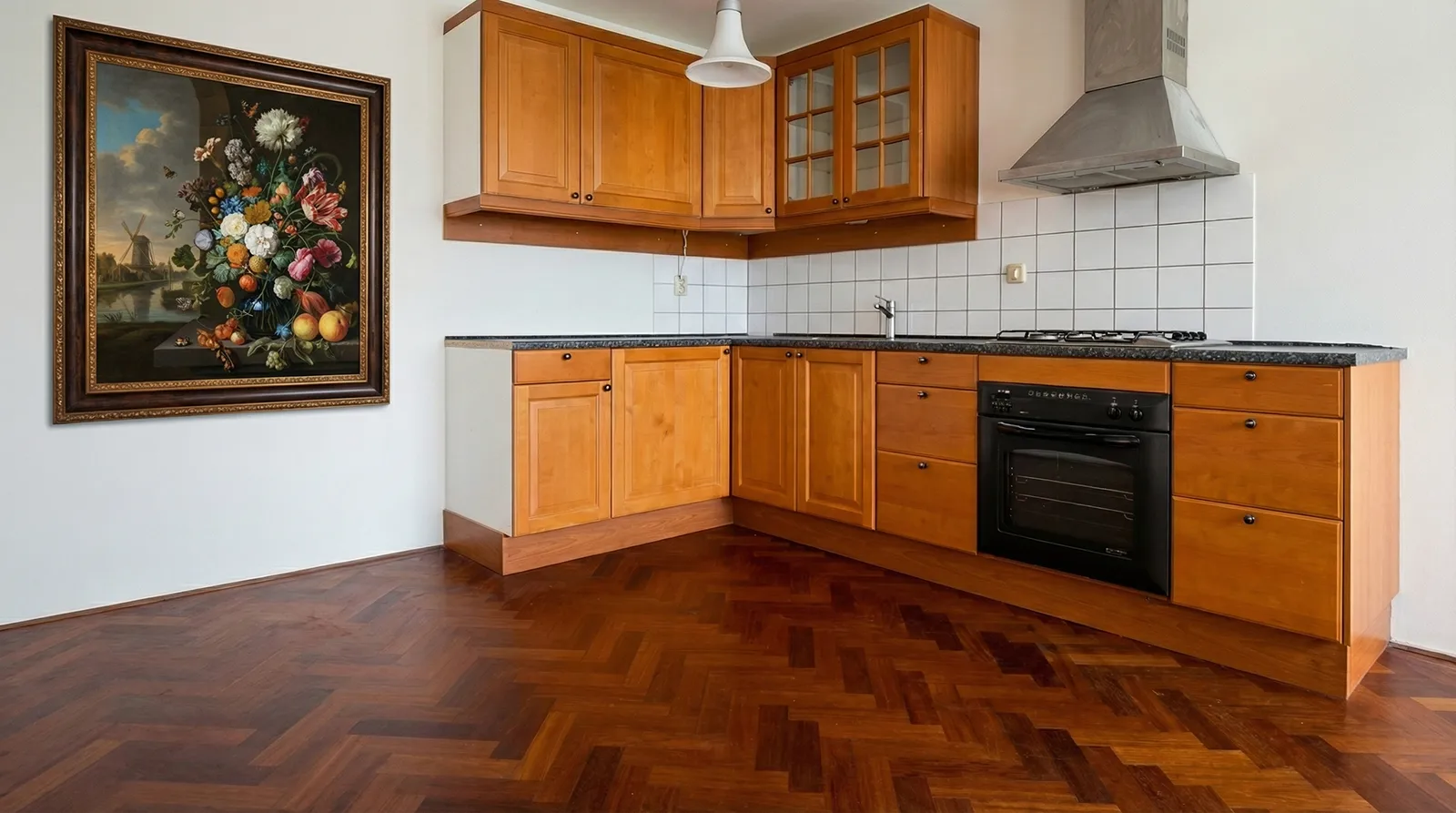
Step into almost any recently renovated property in Amsterdam and you will inevitably notice a distinct pattern beneath your feet. You will look down and see the familiar, rhythmic zig-zag of a visgraat floor. The herringbone floor Netherlands obsession is incredibly real, and it shows no signs of slowing down.
It is easy to understand the appeal. A herringbone pattern instantly elevates a room. It takes a plain, white architectural box and injects it with a sense of history, movement, and warmth. It looks just as striking in a towering 19th-century canal house as it does in a stark, newly built concrete apartment.
But once you decide you want that coveted zig-zag pattern in your own home, you are immediately faced with a frustrating dilemma. The aesthetic is settled, but the material is up for debate. Do you invest in authentic timber? Do you lean into the practicality of modern plastics? Or do you opt for the indestructible nature of ceramics?
Making the wrong choice can lead to warped planks, acoustic nightmares with your downstairs neighbours, or a floor that feels freezing cold in the winter. Let us break down the reality of living with real oak, PVC, and tile so you can make a decision grounded in facts rather than just aesthetics.
The Romantic Classic: Real Oak Parquet
There is a profound, almost primal appeal to real wood. It is a living, breathing material. When you walk across a genuine oak floor in your socks, it feels warm and solid. It absorbs light beautifully and carries a subtle, natural scent that synthetics simply cannot replicate.
The traditional process of visgraat eiken vloer leggen (laying a herringbone oak floor) is a masterclass in craftsmanship. Each individual block of wood must be glued and nailed to a wooden subfloor before being sanded down, filled, and finished with oil or lacquer. It is a labor-intensive art form.
The Pros of Real Oak
The primary benefit is authenticity. An oak floor develops a patina over time. A dropped set of keys or a minor scratch does not ruin the floor; it simply adds to its character. Furthermore, a solid or high-quality engineered oak floor is a lifelong investment. If it starts looking tired after a decade, you can have it sanded back to bare wood and re-oiled, making it look brand new.
The Cons of Real Oak
Wood is inherently temperamental. It expands in the humid Dutch summers and shrinks during the dry, centrally heated winters. This movement can sometimes lead to tiny gaps between the planks.
Additionally, you have to consider the acoustics. If you live in a typical Dutch apartment building, your Homeowners’ Association (VvE) will likely insist on a strict 10-decibel noise reduction rating for any hard flooring. Achieving this strict acoustic standard with real glued-down oak requires highly specialized, expensive underlay systems. Finally, real wood demands respect. You cannot leave a puddle of spilled water sitting on it overnight without risking a dark stain.
The Pragmatic Champion: Modern PVC
If you want the visual impact of herringbone without the emotional stress of maintaining real wood, you are not alone. When weighing up oak parquet vs PVC herringbone NL property owners are increasingly voting for the synthetic option.
High-quality PVC (often called LVT or Luxury Vinyl Tile) has evolved dramatically over the last five years. The days of shiny, cheap-looking linoleum are long gone. Modern PVC planks feature high-resolution photographic layers and embossed textures that mimic the grain and knots of real oak with startling accuracy.
The Pros of PVC
The practical benefits of PVC are enormous. First and foremost, it is entirely waterproof. You can mop it generously, let your dog run across it with muddy paws, or spill a glass of red wine without a single moment of panic.
It is also the undisputed champion for homes with underfloor heating (vloerverwarming). Because the material is very thin and glued directly to a leveled concrete floor, it transfers heat into the room almost instantly. Furthermore, PVC absorbs sound brilliantly. The sharp “click-clack” of high heels on a wooden floor becomes a soft, muffled thud on PVC, making it an incredibly neighbour-friendly choice for apartment living.
The Cons of PVC
Despite the technological advances, a keen eye can still tell it is not real wood. The pattern repeats every few planks, and it lacks the completely unique, chaotic beauty of natural timber. Furthermore, if you severely scratch a PVC plank by dragging heavy furniture across it, you cannot simply sand it out. The damaged plank usually has to be painstakingly removed and replaced.
The Indestructible Alternative: Porcelain Tile
There is a third option that is quietly gaining traction, particularly for ground-floor renovations. The trend of using herringbone tile flooring Dutch homes are adopting is driven by a desire for total invincibility.
Manufacturers now produce long, narrow porcelain tiles designed to look exactly like wood planks. These “wood-look” tiles are laid in the classic herringbone pattern, complete with a color-matched grout that visually disappears into the design.
The Pros of Tile
If durability is your absolute top priority, tile wins the race effortlessly. It will not dent, it will not scratch, and it will never warp. You can run a wet room shower directly onto it, build a heavy kitchen island over it, and expose it to intense, direct sunlight without any fear of the color fading. It is the ultimate “fit and forget” flooring solution.
The Cons of Tile
Porcelain is incredibly dense and heavy. Without underfloor heating, it feels distinctively cold underfoot, making slippers a mandatory winter accessory. It is also completely unforgiving. If you drop a ceramic mug on an oak or PVC floor, it might survive the impact. If you drop a mug on a porcelain tile, it will shatter instantly. Finally, installing tile is a permanent decision; changing it in the future requires heavy demolition work.
Breaking Down the Financial Reality
Whenever homeowners begin a visgraat vloer kosten vergelijken (comparing herringbone floor costs), they often make a critical mistake. They look exclusively at the price per square metre of the material and forget to calculate the preparation and labor.
A herringbone pattern requires immense mathematical precision to lay correctly. If the center line is off by just one millimeter, that error will multiply across the room, ruining the entire visual effect. Because of this complexity, the labor costs for laying herringbone are significantly higher than for standard straight planks.
Then, you must consider the subfloor. For glued PVC to look flawless, your concrete floor must be absolutely perfectly smooth. This requires pouring a liquid leveling compound (egaliseren) over the entire space before the floor is laid. This preparation stage is expensive but entirely non-negotiable.
Real engineered oak is usually the most expensive option overall, factoring in the wood, the specific acoustic underlays, the glue, and the intricate finishing oils. PVC sits comfortably in the middle, while wood-look tiles can vary wildly depending on the quality of the ceramic and the complexity of the tile adhesive and grouting process.
The Foundation of a Flawless Floor
Regardless of whether you choose the organic warmth of oak, the daily practicality of PVC, or the stubborn durability of porcelain tile, one absolute truth remains. The finished floor will only ever be as good as the subfloor sitting beneath it.
If your floorboards are uneven, or if your concrete slab has hidden moisture issues, even the most expensive flooring material will eventually fail. Preparing a house for a high-end floor involves managing moisture levels, resolving structural dips, and navigating complex underfloor heating manifolds.
This is not the stage of a renovation where you want to cut corners. By having a professional team manage the structural preparation and the complex heating installations, you guarantee that your beautiful new herringbone floor remains stable, quiet, and stunning for decades to come.
Final Thoughts
Choosing a new floor is one of the most permanent and impactful decisions you will make during a renovation. It dictates the acoustics, the warmth, and the entire visual personality of your home.
If you value tradition and organic beauty above all else, real oak is still the undisputed king. If your life is chaotic, busy, and filled with spills, modern PVC will offer you total peace of mind. And if you want a surface that will outlast the building itself, porcelain tile is waiting in the wings.