
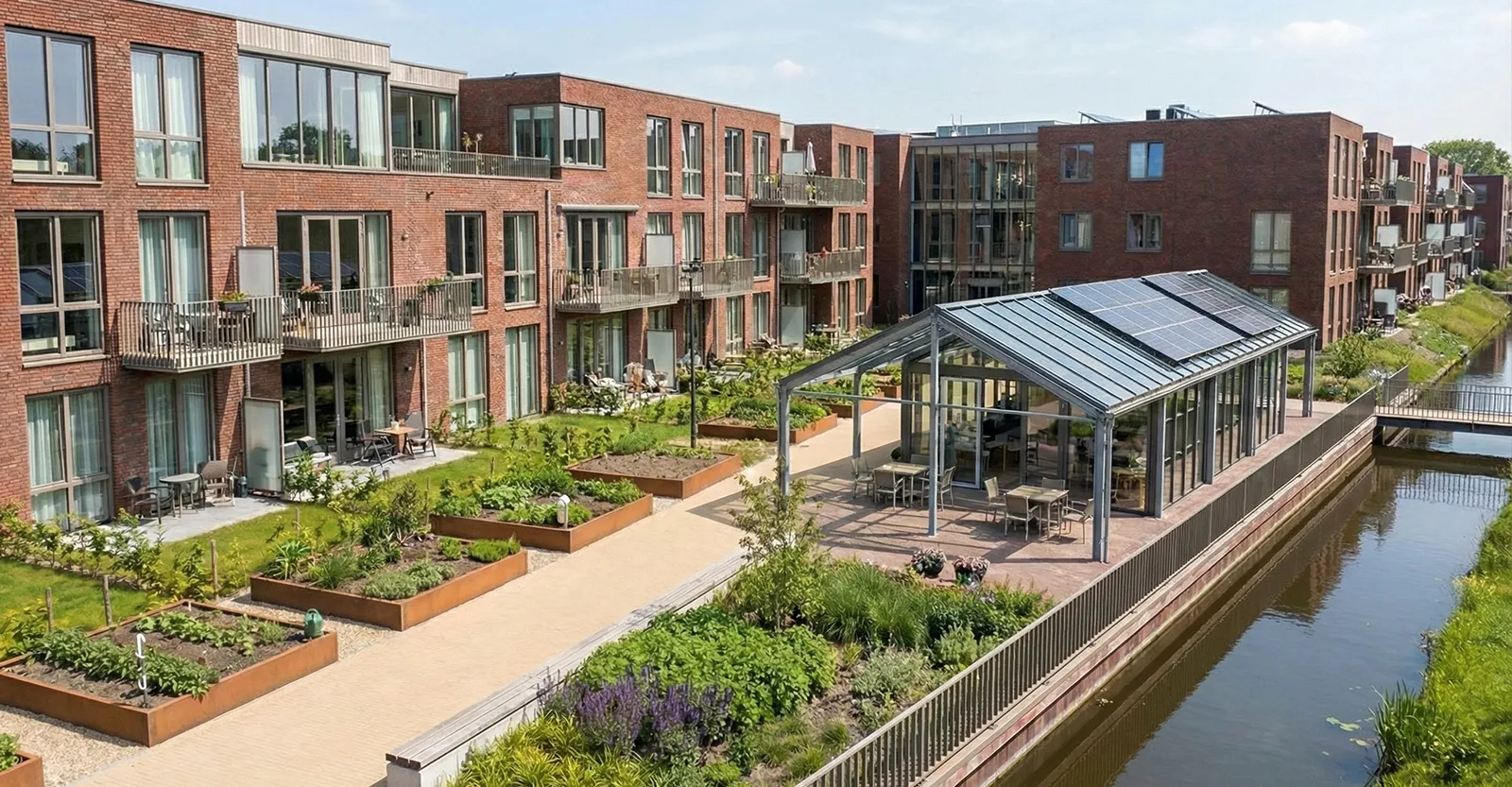
The Netherlands is quietly bracing for a demographic tidal wave. It is no longer enough to build for the young families of tomorrow; we must now build for the seniors of today. As the number of residents aged 75 and older climbs, the relationship between the aging population and Dutch housing is undergoing a fundamental shift.
This isn’t just about installing a few grab bars. It is a thorough rethinking of accessibility, flexibility, and longevity in construction. For homeowners and builders alike, the “silver years” are becoming the gold standard for design innovation.
The Reality of the Aging Population and Dutch Housing
The numbers paint a stark picture. Projections indicate that households headed by someone over the age of 75 will surge by more than 70% in the next two decades. Consequently, the demand for suitable living spaces is outpacing supply at an alarming rate.
Most of these seniors prefer to stay in their current homes rather than move to care facilities. However, a significant bottleneck exists. In 2024, only a tiny fraction of planned senior-appropriate homes were actually completed. This mismatch has a domino effect: when seniors remain in large, family-sized homes because they have no viable alternative, it stifles the market for younger buyers looking to move up.
Aging in Place: Redefining Accessibility
For the average Dutch homeowner, the goal is “aging in place” – remaining independent in a familiar environment. This desire is driving a wave of renovations and new design standards.
Architects are now prioritizing features that were once afterthoughts. We are seeing wider doorways to accommodate walkers, curb-less “wet room” showers that eliminate tripping hazards, and private elevators in multi-story dwellings.
However, the challenge remains acute in historic urban centers like Amsterdam. Here, up to 43% of older households live in properties that are notoriously difficult to adapt. Steep staircases and narrow halls make these charming homes potential traps for those with limited mobility.
Flexible Living for a New Era
Modern design is answering this challenge with flexibility. The static floor plans of the past are giving way to adaptable layouts. A ground-floor study today can easily transform into an accessible bedroom tomorrow.
Furthermore, developers are increasingly exploring multi-generational living. These homes are designed to house older adults alongside younger family members or caregivers, offering independence without isolation. This shift requires modular designs and future-proof installations that allow a home to evolve alongside its occupants.
The Construction Crunch: Barriers to Progress
While the demand is clear, the path to meeting it is fraught with obstacles. The construction industry faces a dual challenge. On one hand, there is immense pressure to deliver specialized housing. On the other, the sector is grappling with labor shortages, rising material costs, and strict regulatory hurdles, such as nitrogen emission limits.
The OECD has highlighted that slow permitting processes are further hindering the supply of suitable housing. Builders must navigate these constraints while trying to cater to a senior demographic that often desires mid-to-high-end options, rather than just “affordable” senior blocks.
Building for a Lifetime
Ultimately, catering to the aging population and Dutch housing needs is not a niche trend; it is the new normal. Features that support independence and dignity for seniors – like step-free access and smart home technology – raise the quality of life for residents of all ages.
When you design a home that works for someone twenty years older, you aren’t just building for the moment. You are building for life. Whether you are a developer sketching a new project or a homeowner planning a renovation, the question remains: is your property ready for the future?