Zaandam · Amsterdam · Haarlem
We waterproof bathrooms and showers and deal with damp walls and leaking basements. A damp wall looks much the same whatever made it wet, so we find the source first, then put the method, materials and duration in a written offer.
Before and after
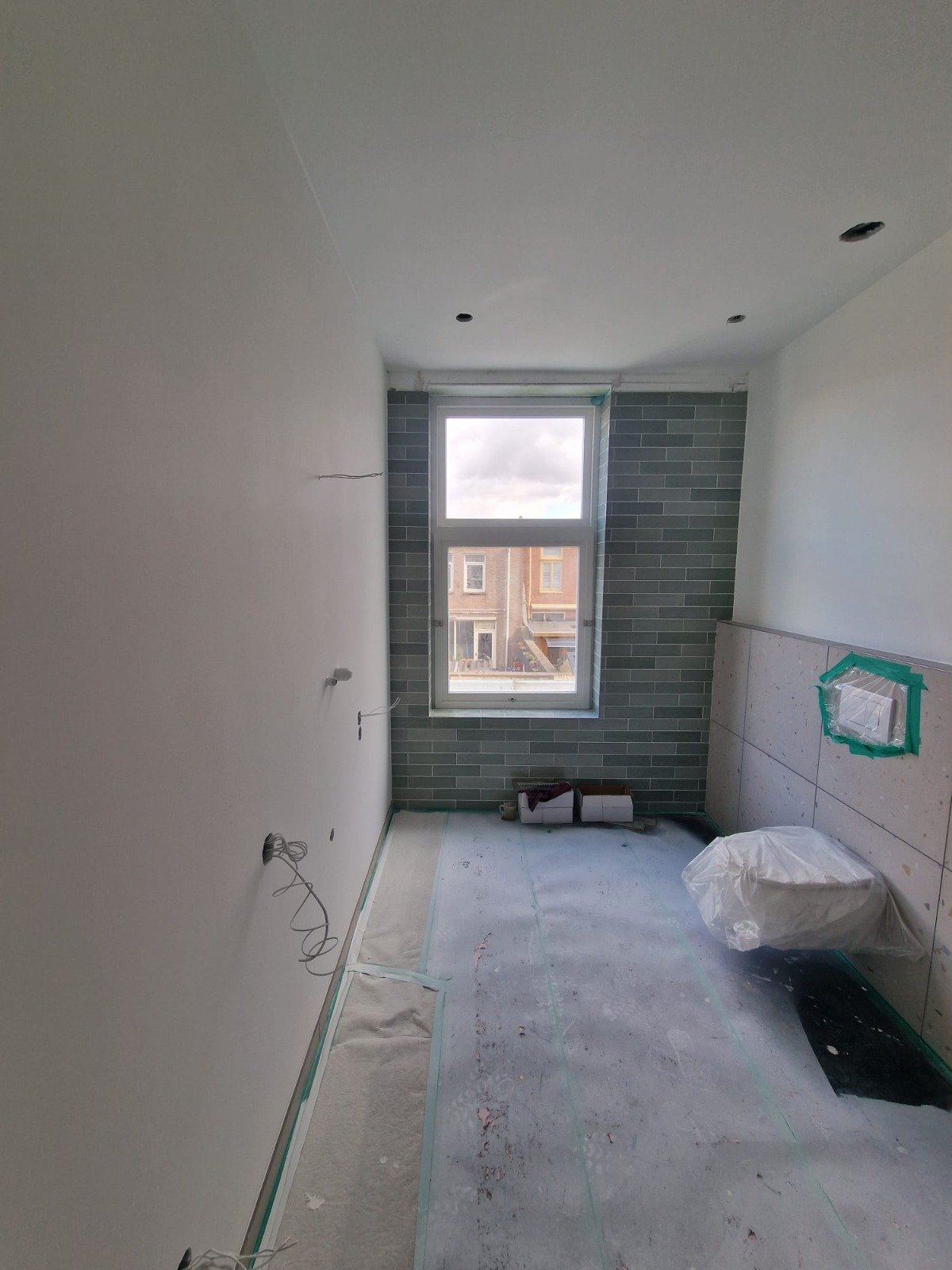
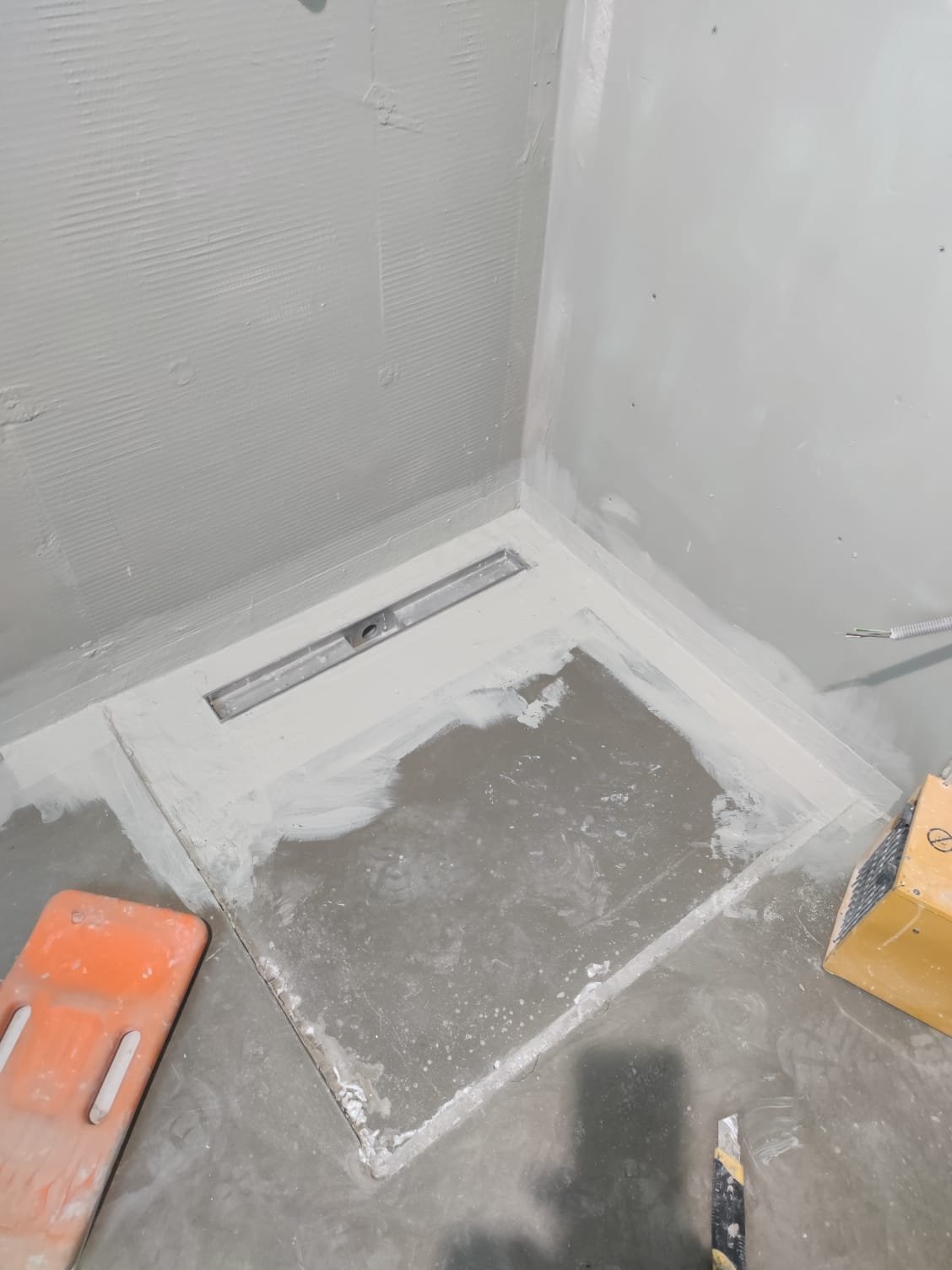
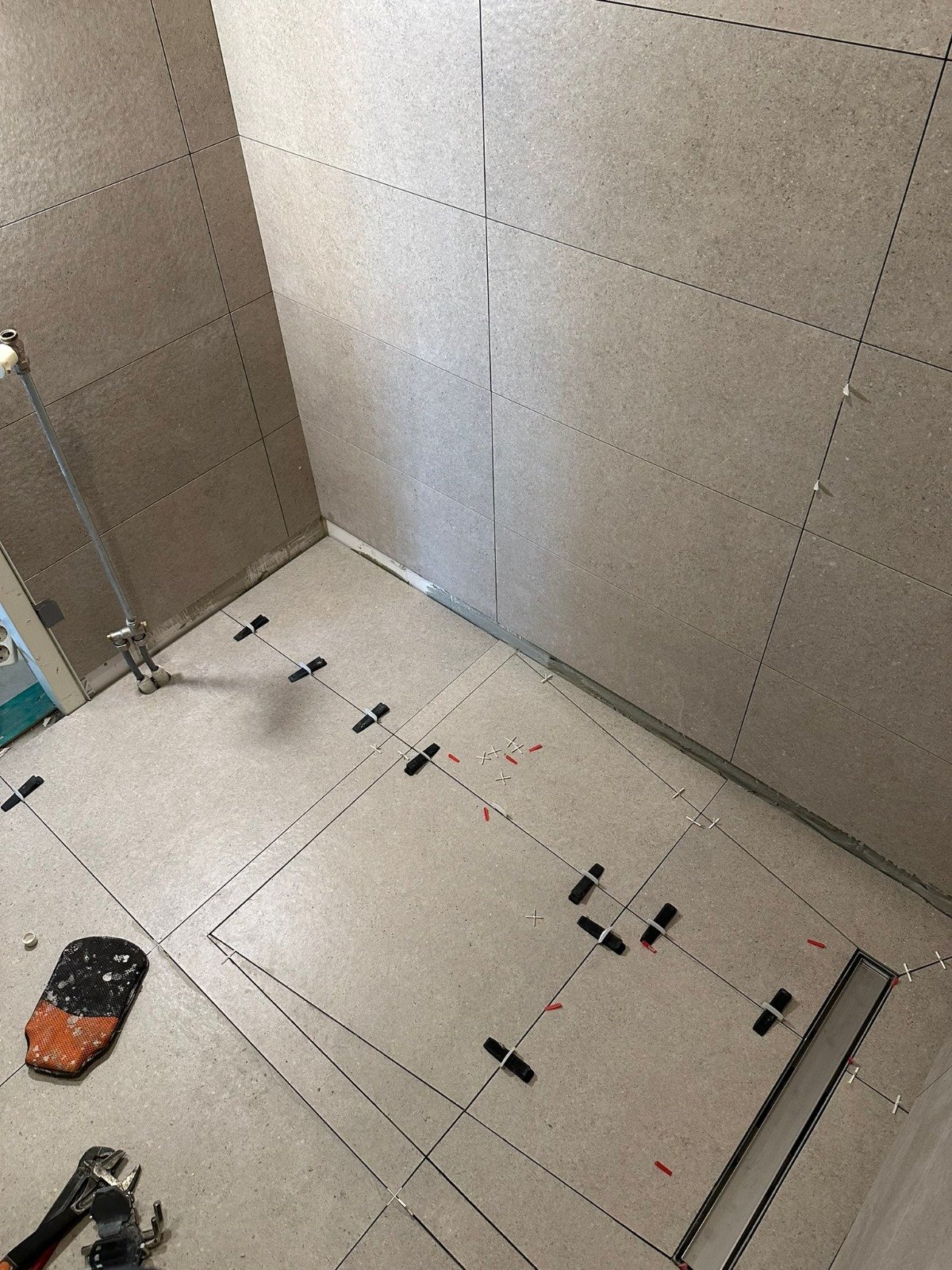
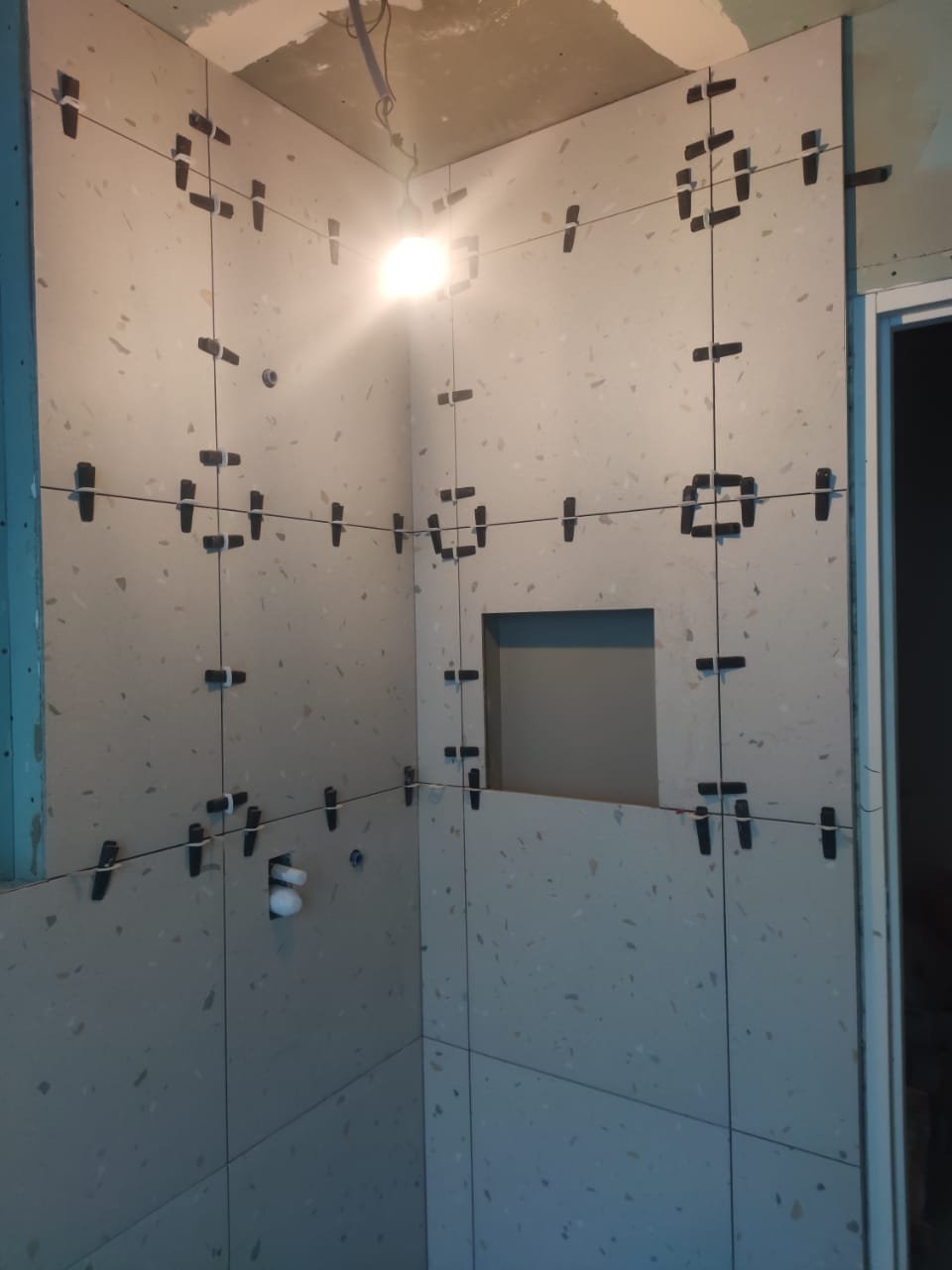
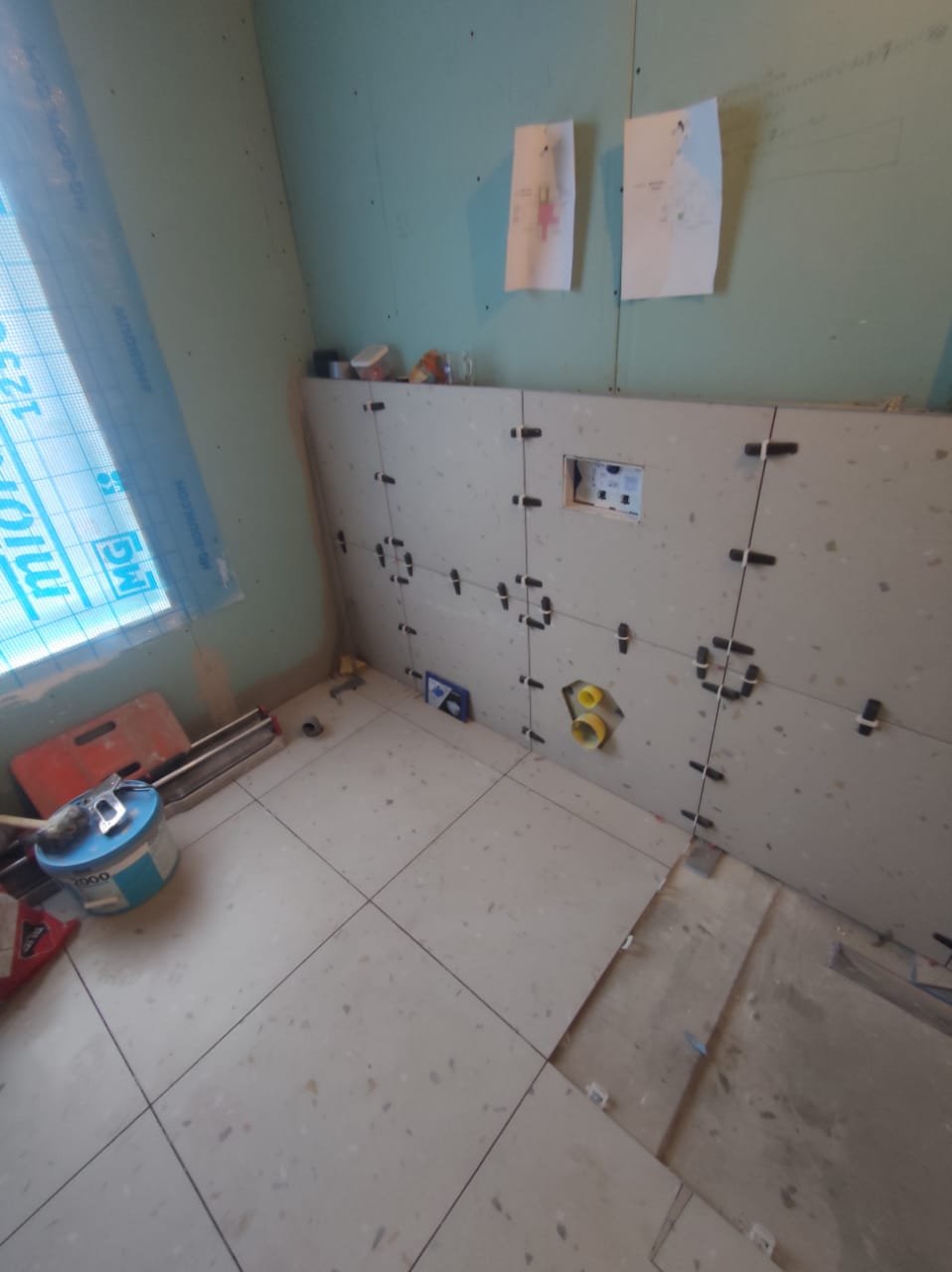
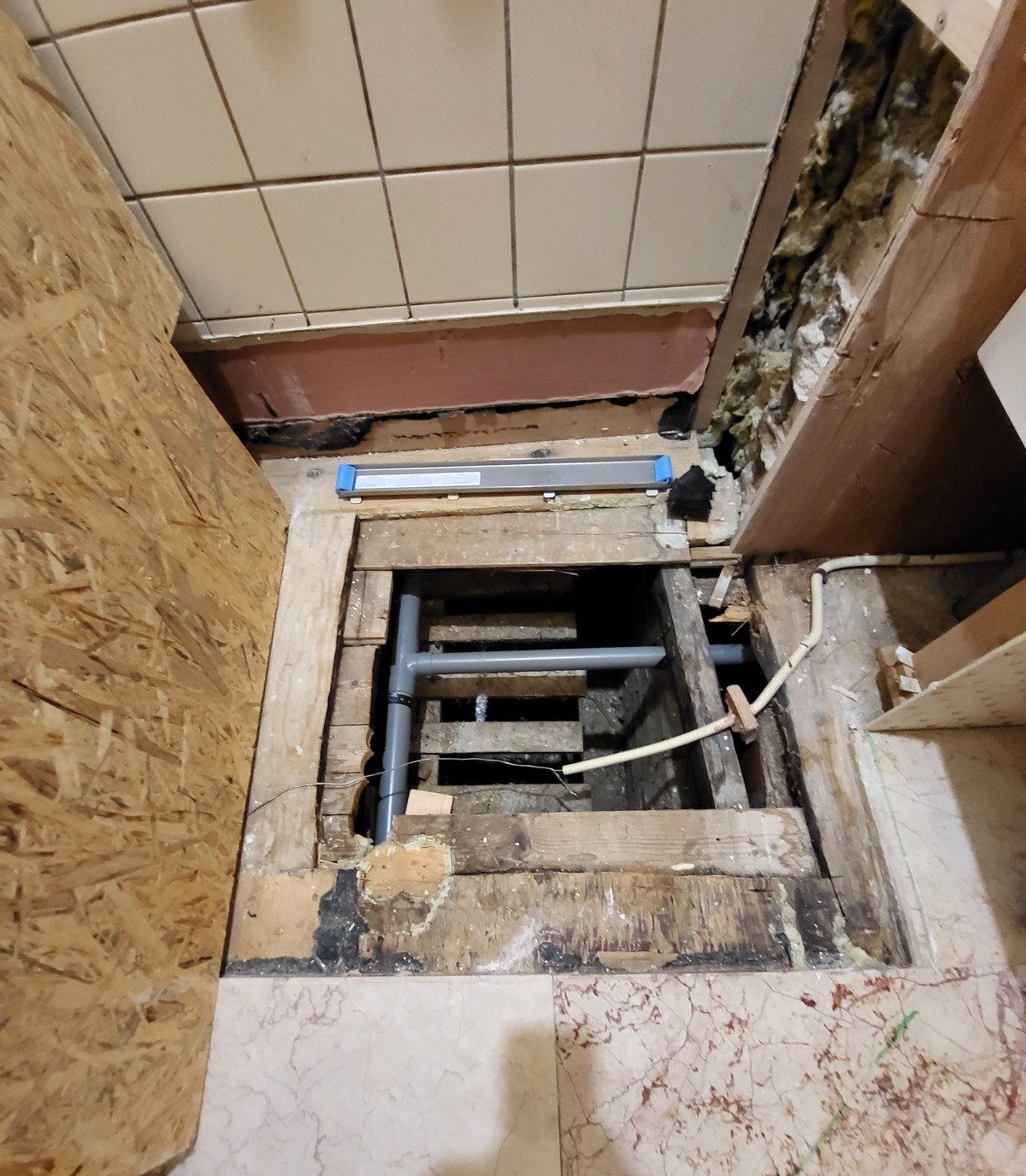
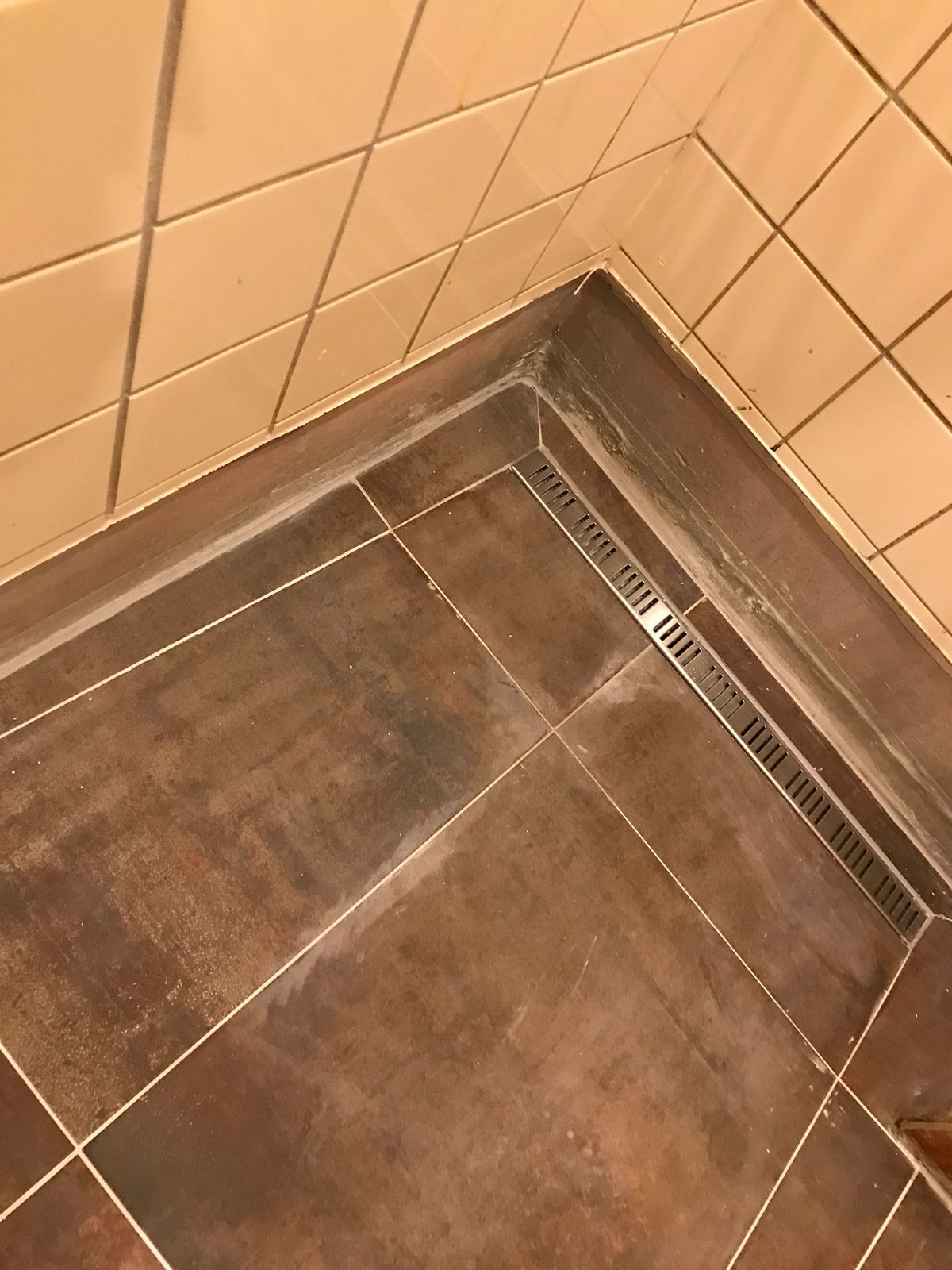
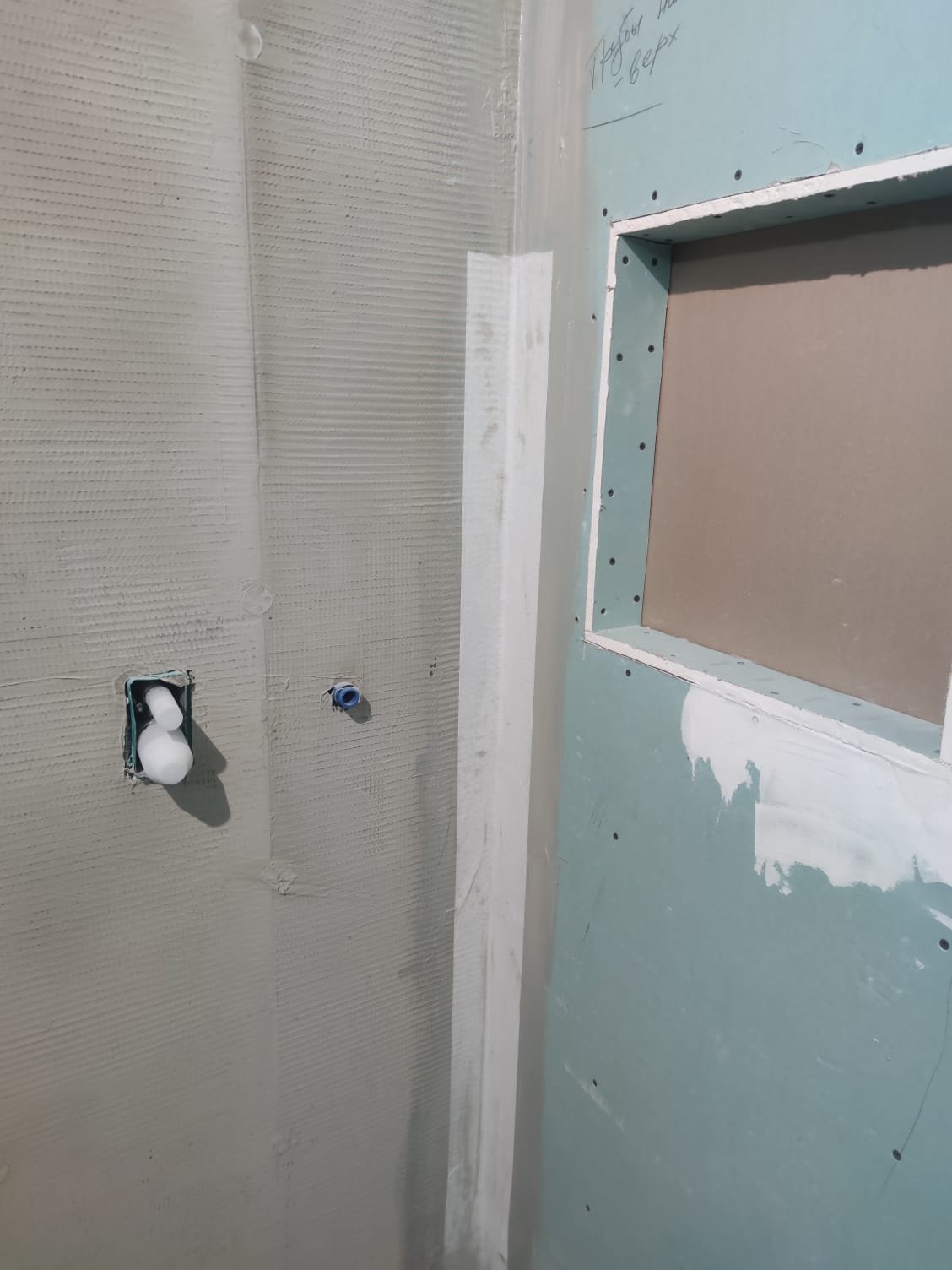
Drag the line to compare. One bathroom in Haarlem: the old room and the new one, and the shower with its sealing layer before the tiles went on.
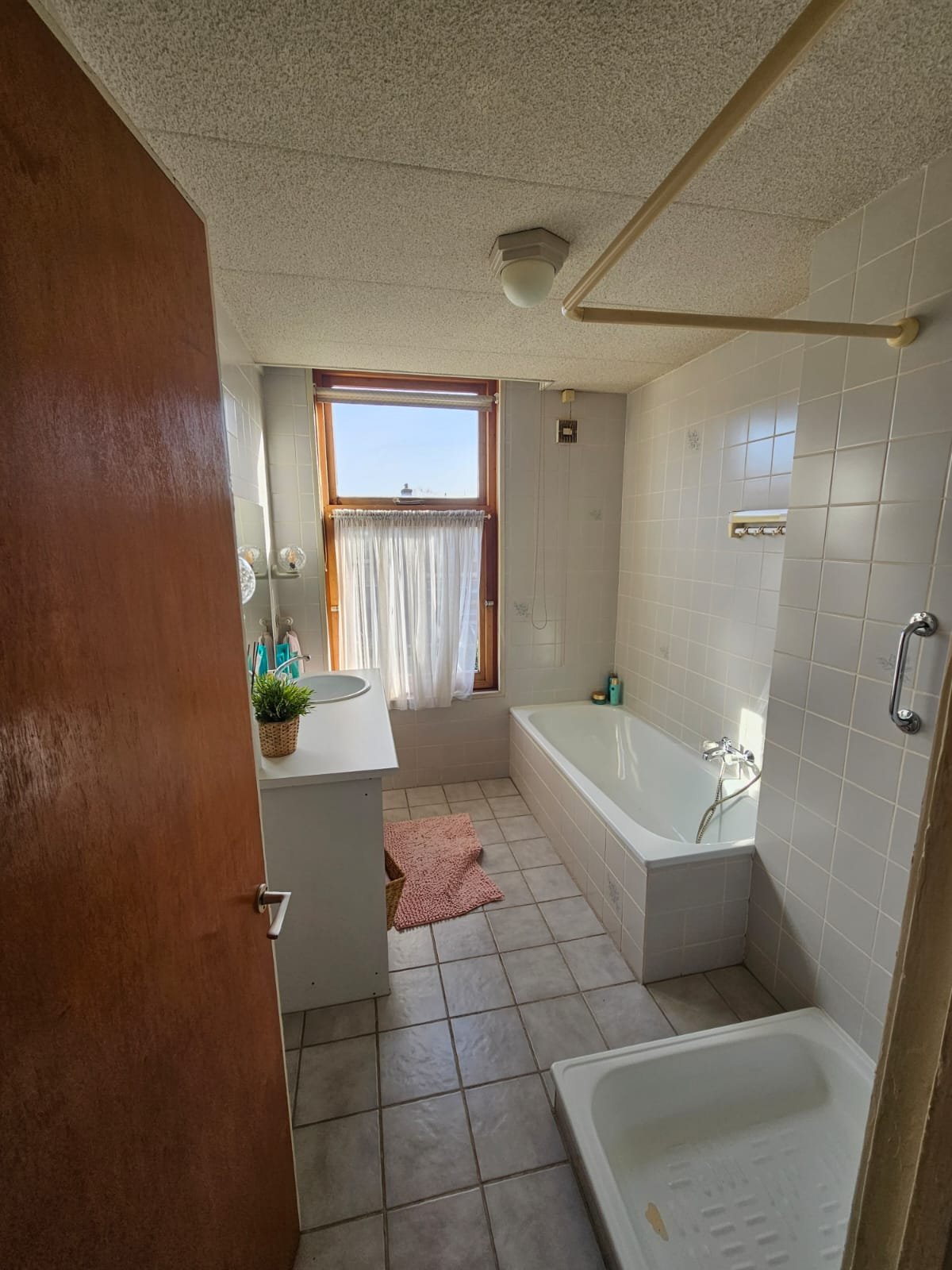
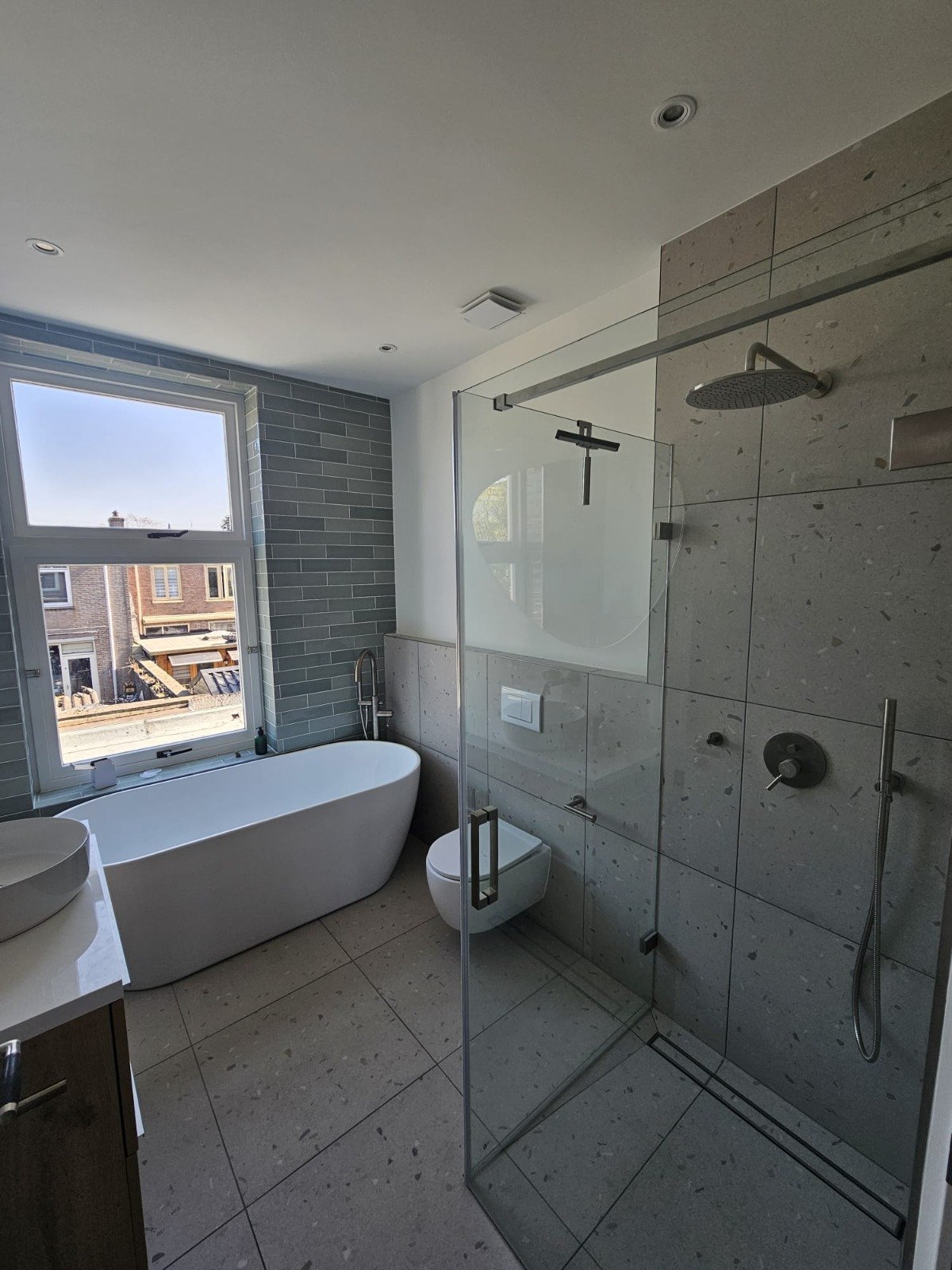 BeforeAfter
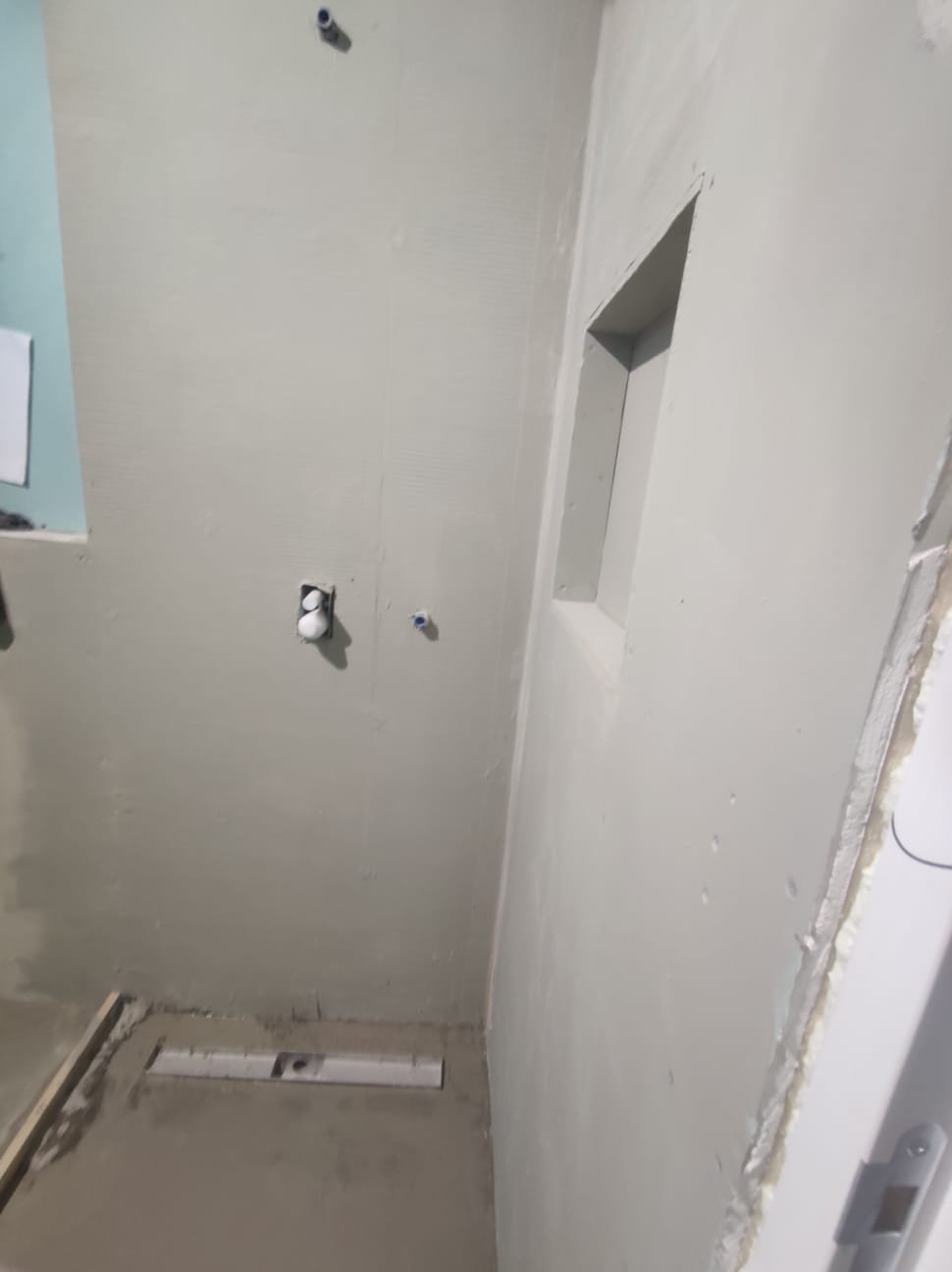
 BeforeAfter
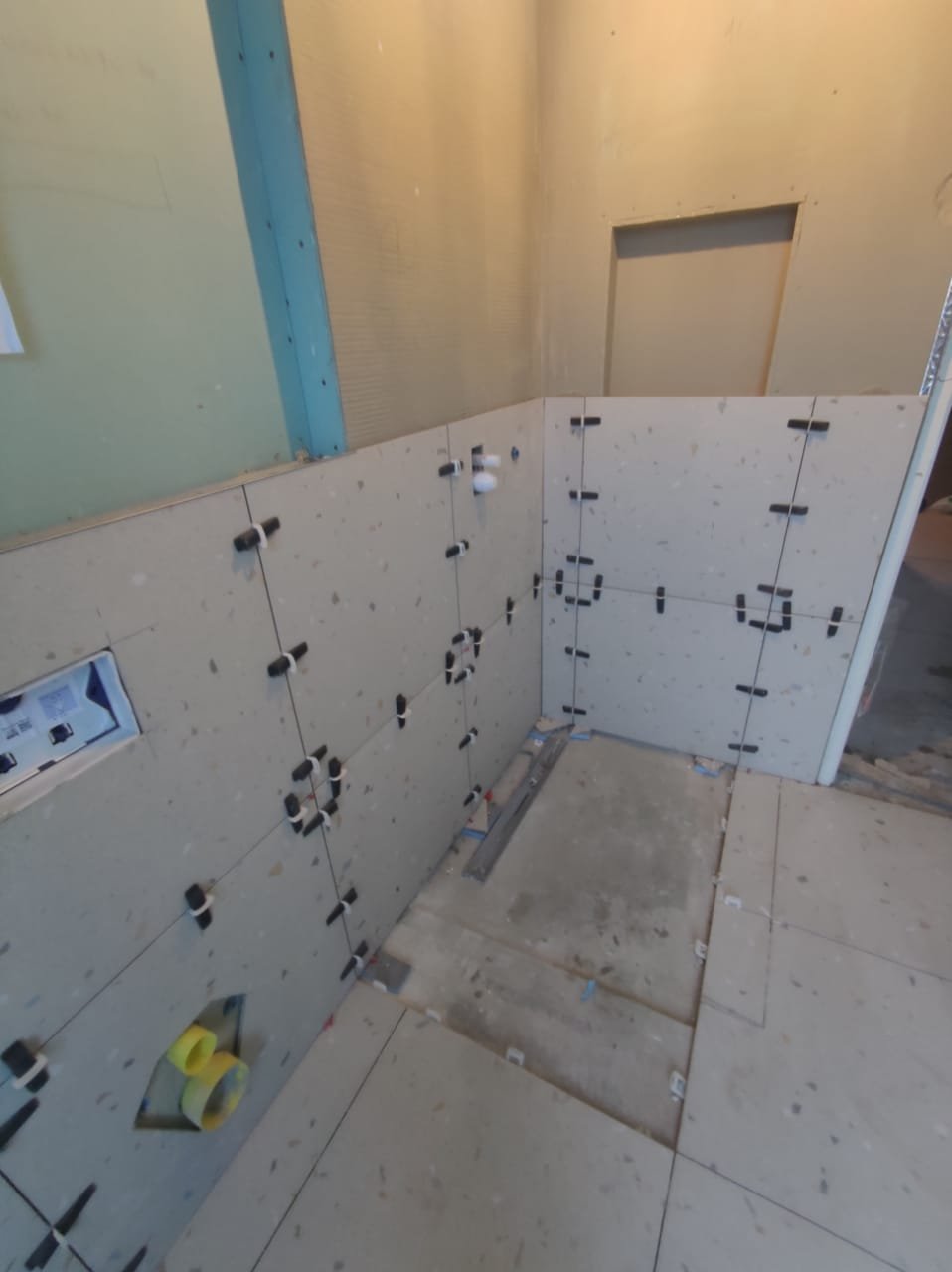
 BeforeAfter
What we take on
Each source of water needs a different answer, so the work starts with a look at where it comes from. Items with a link have a page of their own.
A leaking shower, groundwater, rising damp, a leaking gutter or condensation. Condensation needs ventilation and a leaking gutter needs repair, not waterproofing.
The sealing layer is part of our bathroom renovation, done by the team that does the plumbing and the tiling.
A liquid membrane or a sealing sheet, with sealing tape in the corners and collars around the pipes and the drain, all from one system.
Without a shower tray the floor itself holds the water, so the seal at the drain decides whether the room below stays dry.
Worn sealant can be renewed. Water behind the tiles at the drain or a pipe means opening that part up; the offer says which applies.
Running leaks and cracks closed with fast-setting mortar, a waterproof cement render inside, and a coating outside where the wall can be reached.
A water-repellent cream injected into holes drilled in a mortar joint, where it forms a horizontal barrier.
That calls for better extraction, part of our HVAC services, not a coating.
Damaged plaster renewed as part of our plastering work.
Recent project
Haarlem
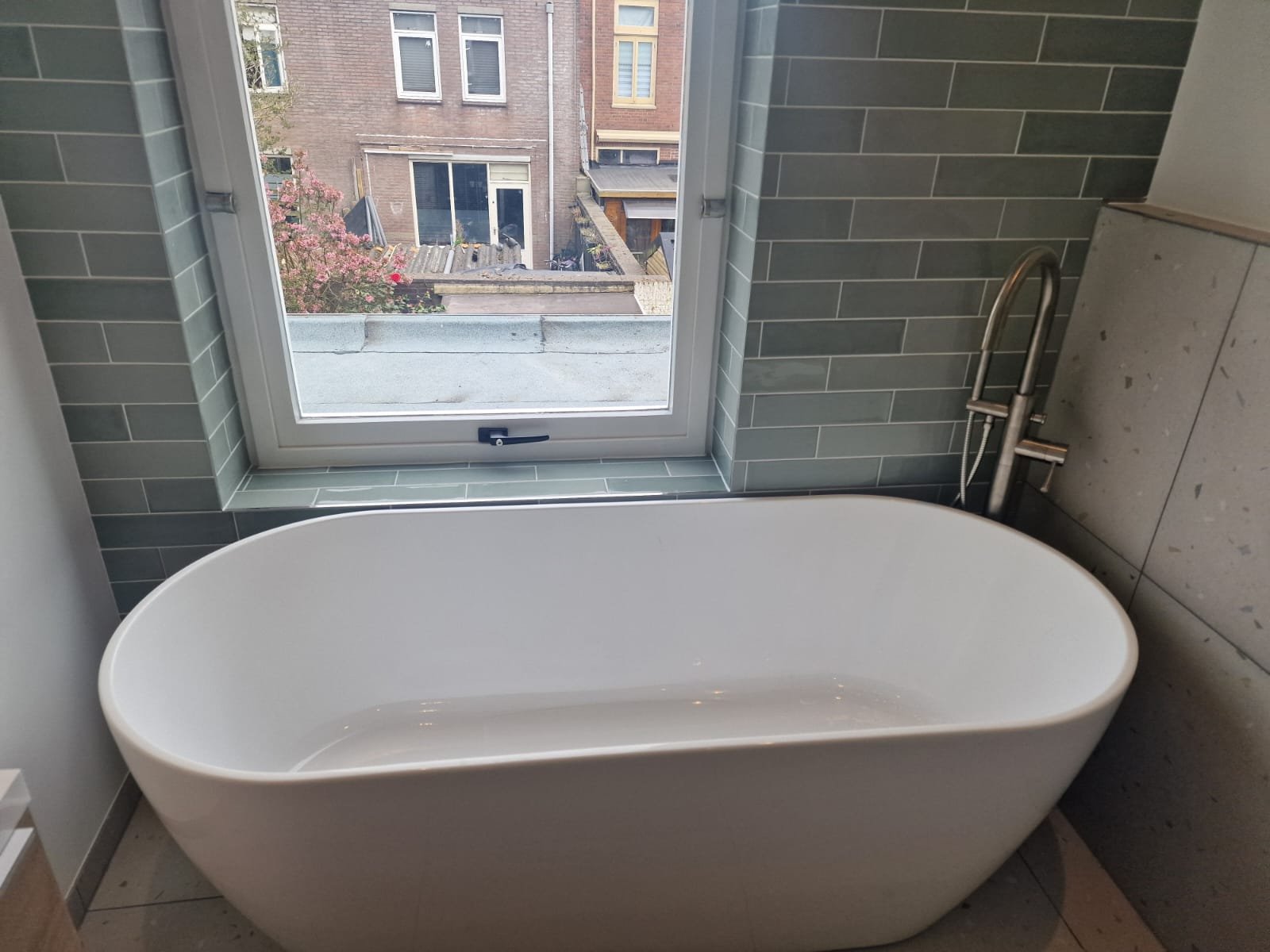
First-floor bathroom
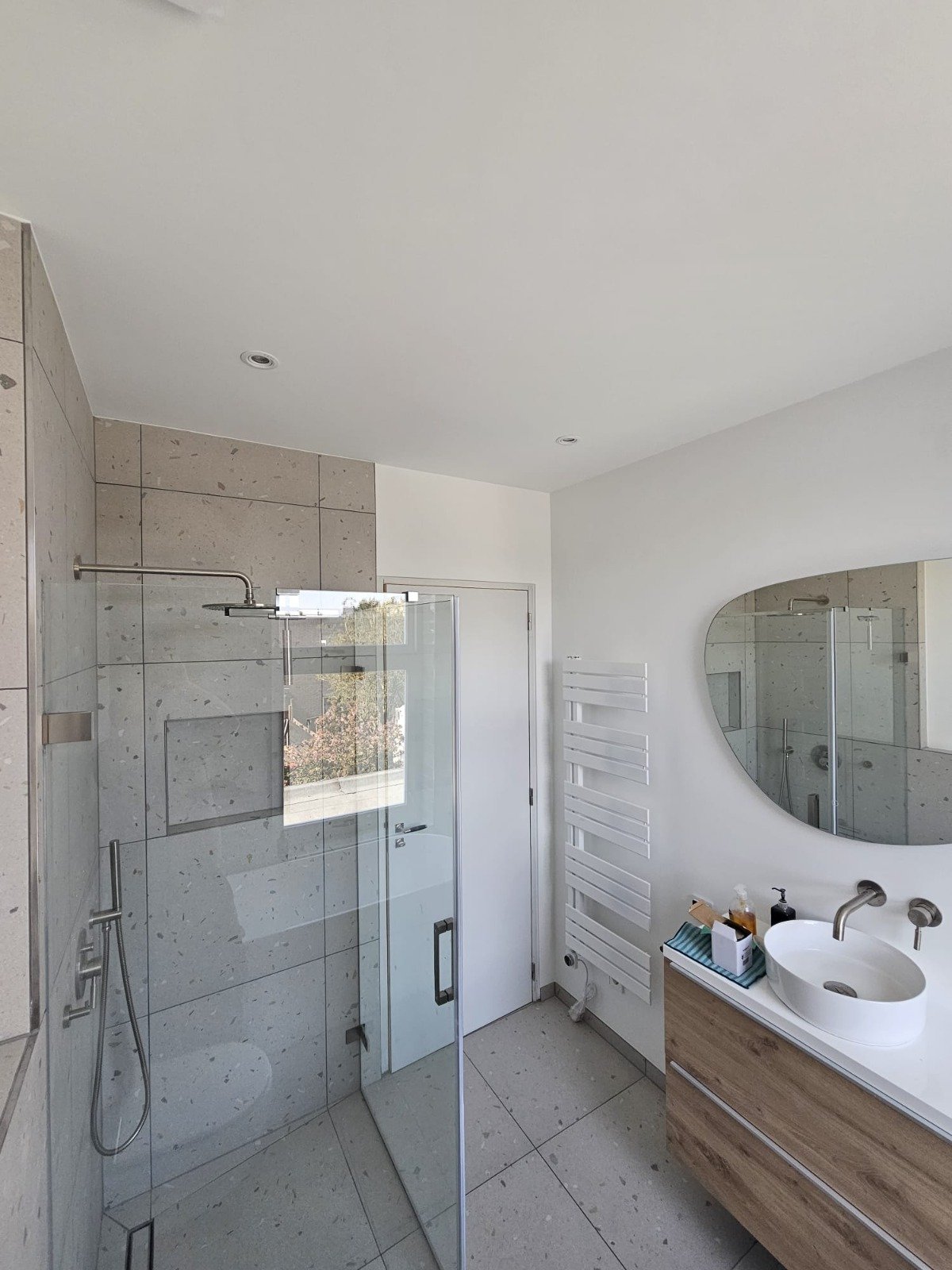
A freestanding bath under the window, a walk-in shower with a linear drain, designer tiles.
Haarlem
Ground-floor extension
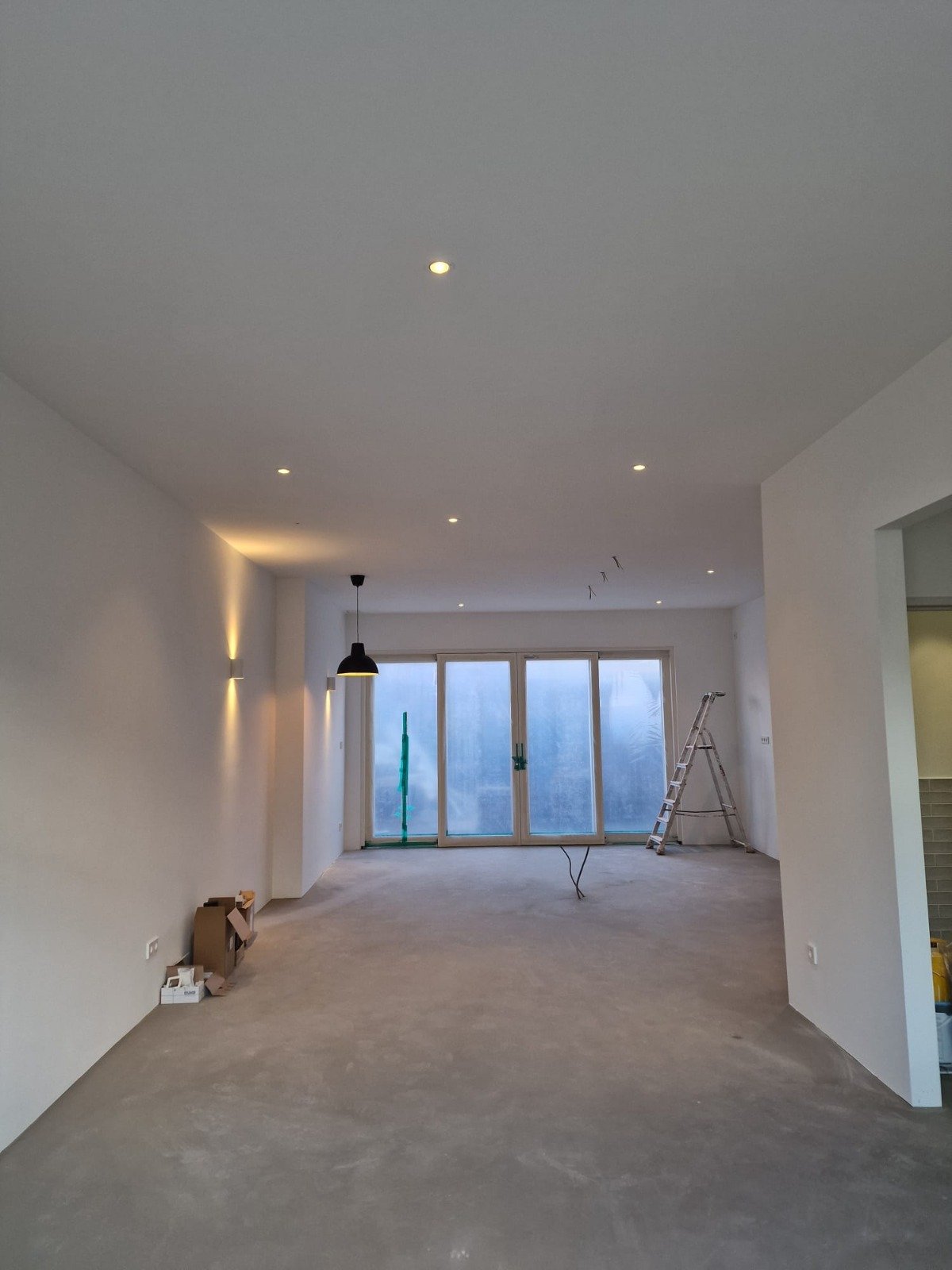
A ground-floor extension with glass doors to the garden and underfloor heating.

Haarlem
Toilet
Glossy wall tiles, patterned floor tiles and a wall-hung toilet.
Why people choose us
The sealing layer is put down by the team that also does the plumbing and the tiling. We supply the waterproofing materials; you choose and buy the tiles.
The method, materials and labour, what you buy yourself and the approximate duration. Extra work is discussed with you first.
Our VCA-certified crew works with dust extraction and cleans up every day.
We give a one-year warranty on our work, and we are insured against accidental damage.
What clients say
★★★★★4.7 out of 5 · 102 reviews
“Thank you very much for all te hard work and good worksmanship! If we have any renovation plans in the future, we will definitely think of you. The guys all were truly professional and respectful, our compliments!”
How it works
Every leak is different. Once we have looked and measured on site, you get a price for your job, not an estimate.
Book a free consultationThe form, or a call. Tell us where the water shows up and since when; a photo helps.
We contact you to arrange a visit. An account manager comes to look and measure.
A detailed offer with the work, the materials and the expected duration, so you know what you are agreeing to before anything starts.
Details
Questions
No. Send the form or call us, and tell us where the water shows up and since when. We come to look and measure, then send a written offer. The first consultation is free and without obligation.
Tiles and grout are not watertight on their own. Only a sealing layer under the tiles, closed at the drain and the pipes, stops the water.
Usually not when it comes from worn sealant or grout. Damage from a defect or an unforeseen event can be. Your policy terms decide.
Running leaks and cracks are closed first, with fast-setting mortar. A waterproof cement render on walls and floor then holds back water pressing from outside, with a separate seal at the joint between wall and floor. Sealing from the inside keeps water out of the room; it does not lower the groundwater.
First make sure it is rising damp and not a leak or condensation. If it is, an injected barrier in the wall is a common treatment; a vapour-tight coating is not.
Work that leaves the load-bearing structure, fire compartments and facade insulation unchanged needs no permit for the technical building activity (Bbl, article 2.27). In an apartment, the law lets owners alter their own flat without the VvE's consent, but many splitsingsreglementen say otherwise. Permits and VvE consent are your responsibility; we do not arrange them. At the survey we point out what your job is likely to need.
Yes, a one-year warranty on our work. We are also insured against accidental damage during the work.
Tell us where the water shows up and since when. We come to look and measure, then send a written offer. No obligation.
Open now · on the phone until 18:00


 Haarlem