
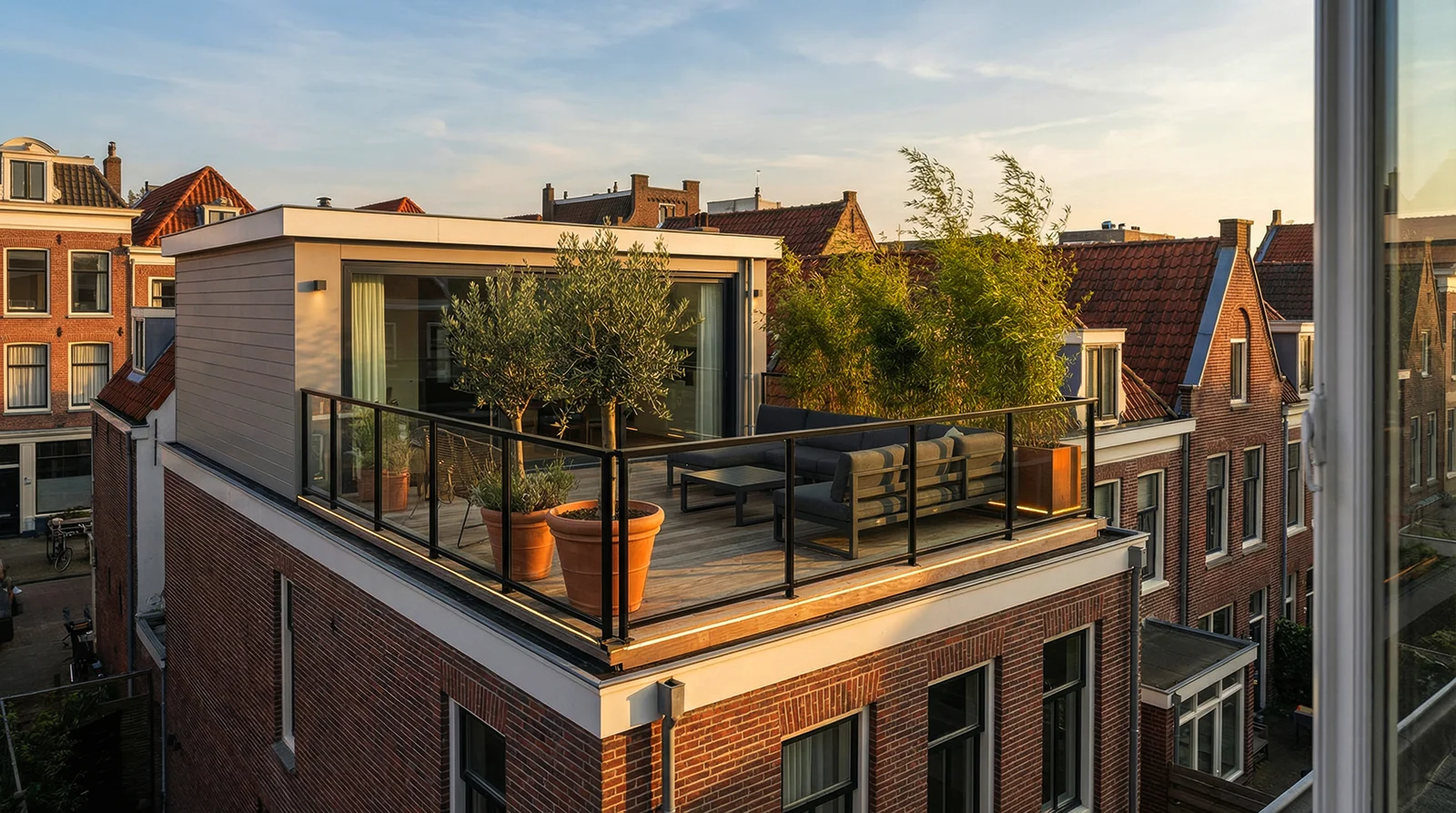
Space is arguably the most precious commodity in the Netherlands. If you are lucky enough to own a home with a ground floor extension, you have probably spent a quiet Sunday morning gazing out of a first floor window, looking at that expanse of flat, black bitumen below. It is dead space. It just sits there, collecting rainwater and fallen leaves.
It does not take long for the imagination to take over. You start picturing a sleek wooden deck, some potted bamboo, a comfortable lounge set, and a place to drink your coffee in the morning sun. Transforming that empty flat roof into a vibrant outdoor living space is a brilliant idea. In fact, adding a roof terrace extension Netherlands style is one of the most coveted property upgrades in the country.
However, making that dream a reality involves a lot more than just dragging a few deck chairs out of a window. A flat roof is an intricate piece of engineering. To turn it into a usable, legal, and safe terrace, you have to navigate a complex web of structural physics, municipal bureaucracy, and strict privacy laws.
Here is exactly what you need to know before you start buying outdoor furniture.
The Bureaucracy: Permits and Privacy
The very first hurdle you will face has nothing to do with building materials. It is entirely about the law. You cannot simply build a terrace because you own the roof.
In the Netherlands, applying for a building roof terrace permit NL (an omgevingsvergunning) is a strict legal requirement. Municipalities take these applications very seriously because roof terraces fundamentally alter the appearance of a building and, crucially, impact the people living next door.
This brings us to the famous Dutch privacy laws, commonly referred to as the burenrecht. When you stand on a newly elevated platform, your line of sight changes dramatically. Suddenly, you might be looking directly into your neighbour’s bedroom or down onto their secluded garden patio.
Because of this, the dakterras op aanbouw regels (rules for a roof terrace on an extension) usually dictate that your terrace must stay at least two metres away from the property line. If you want to build right up to the boundary edge, you will need explicit, written permission from your neighbours, or you will have to install an opaque privacy screen that is usually around two metres high.
Engaging your neighbours early in the process is not just good manners. It is a vital strategic move. A single formal objection from the people next door can delay your permit application by months or derail the project entirely.
The Physics: Will the Roof Hold?
Once you have the theoretical permission to build, you have to face the physical reality of the structure. This is where many homeowners receive a bit of a shock.
A standard flat roof built over a kitchen or living room extension is designed to hold its own weight, plus a safety margin for a heavy layer of winter snow or pooling rainwater. It is absolutely not designed to support the dynamic weight of a hardwood deck, a steel railing, wet soil in heavy ceramic planters, and a group of friends gathering for a summer barbecue.
Before any work begins, a structural engineer must calculate the dakterras constructie eisen (structural requirements for the roof terrace). They will examine the existing wooden or concrete joists spanning your extension.
In almost every case, the roof will need to be reinforced. If you are planning an extension from scratch and know you want a terrace on top, your architect can factor these heavy load bearing requirements into the initial blueprints. This makes the timber framing thicker and the support columns stronger from day one. If you are retrofitting a terrace onto an older extension, the builders will likely need to open up the ceiling below to add significant structural steel or extra timber joists.
The Shield: Waterproofing and Drainage
Your extension roof has one primary job. It must keep the valuable rooms underneath completely dry. When you build a terrace, you are introducing screws, heavy weights, and constant foot traffic to a delicate waterproof membrane.
A tiny puncture in the roofing material could lead to a slow, invisible leak that slowly rots the new ceiling of your kitchen. Therefore, waterproofing must be handled with military precision.
You should never lay decking directly onto the roofing felt or EPDM rubber. Instead, builders use a system of floating supports. These are adjustable rubber or plastic pedestals that sit gently on the roof surface. The wooden or composite decking beams then rest on these pedestals.
This floating system does three brilliant things. First, it protects the waterproof membrane from friction and punctures. Second, it allows rainwater to flow freely underneath the deck to the drainage points, preventing puddles. Third, it allows you to easily lift a section of the decking in the future if you ever need to inspect the roof or clear a blocked drain.
Breaking Down the Financial Reality
Because of the engineering and safety requirements, this project is a serious financial commitment. When calculating your total extension roof terrace cost, you need to look far beyond the price of the wooden floorboards.
A realistic budget must include several hidden expenses. You will have to pay municipal fees for the permit application and hire a structural engineer to draw up the mandatory calculations. Then comes the cost of the structural reinforcement itself, which is often the most expensive part of the project.
Next, building regulations dictate that you must install a secure railing around the perimeter to prevent falls. This fence or balustrade must be at least one metre high and strong enough to withstand significant force. Whether you choose sleek black powder coated steel, frameless safety glass, or vertical timber slats, a high quality balustrade is a major line item on your final bill.
Despite the high initial outlay, property experts consistently agree that a legally permitted, well constructed outdoor space adds immense financial value to a Dutch home, often paying for itself when it comes time to sell.
Summary
Adding a terrace to your ground floor extension is a transformative project. It pulls you out of the shadows and gives you a private slice of the sky. It offers a place to grow herbs, host dinners, and escape the bustling streets below.
While the journey involves a fair amount of red tape, structural calculations, and careful financial planning, the end result is undeniably worth the effort. It just requires patience, respect for the rules of physics, and a team of professionals who know how to build it right.