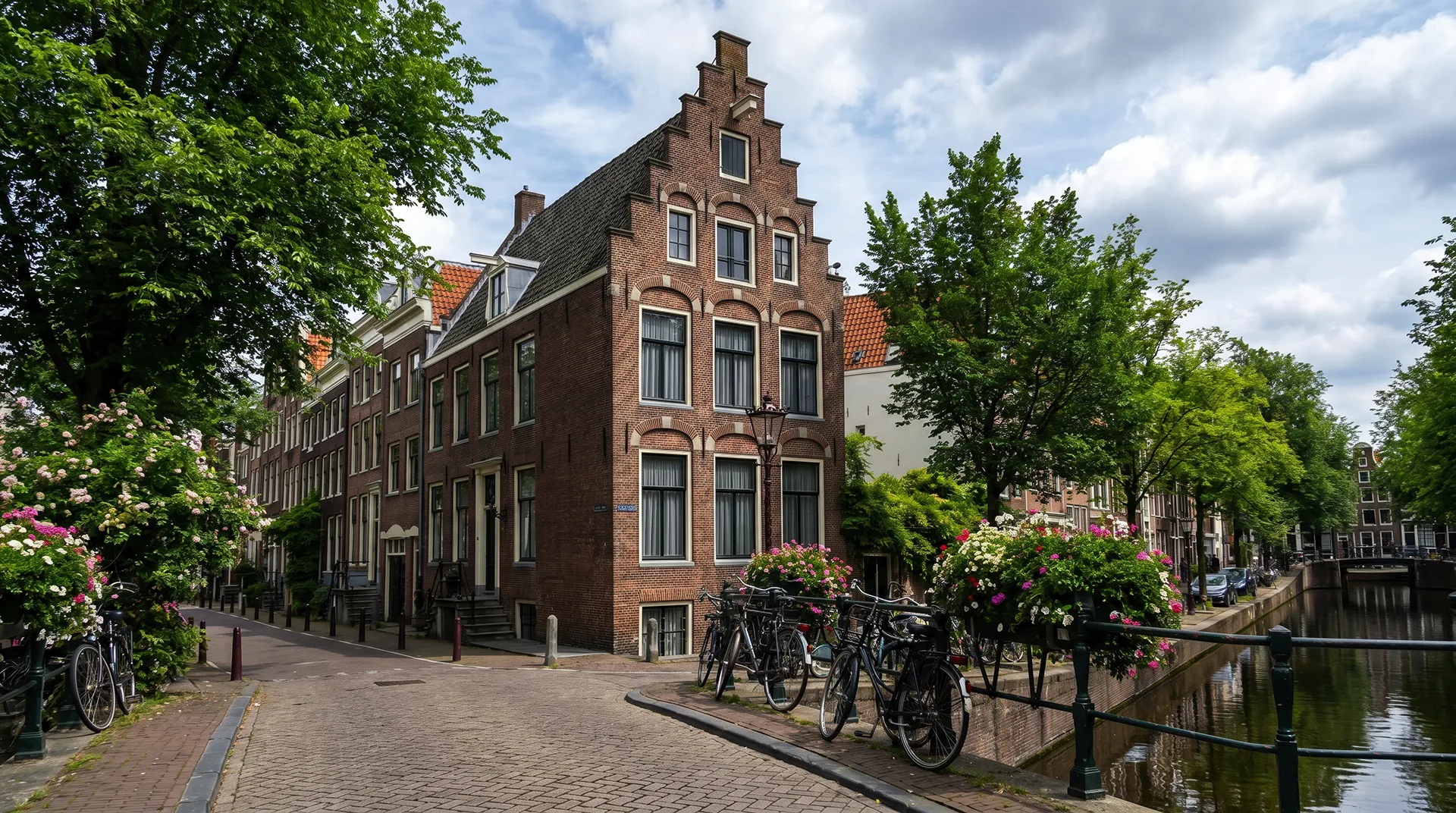
Renovating a listed home in the Netherlands is not the same as renovating a standard house. A rijksmonument or gemeentelijk monument comes with extra rules, slower decisions, more documentation and stricter choices about materials and detailing. That same status can also open access to grants, subsidies and specialist loans that ordinary homes do not qualify for.
The practical question for owners is where the lines fall: what may be improved, what must be preserved, and what cannot be touched without permission.
Monument status: national, municipal and protected views
Before discussing costs or contractors, confirm the building’s status.
A rijksmonument is protected at national level for its cultural, architectural, historical or scientific value. These buildings are listed in the Rijksmonumentenregister, searchable by address, postcode, monument number or name.
A gemeentelijk monument is protected by the municipality. It may lack national status, but its local heritage value still matters, and the rules sit in the municipal environment plan.
There are also provincial monuments, protected townscapes (beschermde stads- en dorpsgezichten) and properties that are not listed themselves but stand inside a protected area. That last category catches many owners out: a house may not be listed individually, yet exterior changes can still face strict review because the street, canal or village centre around it is protected.
The conclusion is the same in each case. Check the status before making renovation plans, rather than assuming it.
How heritage rules differ from standard renovation
A standard renovation asks what the owner wants, what the building needs and what is technically possible. A heritage renovation adds one more question: what must be preserved.
That question touches almost every decision. Replacing a modern bathroom in a non-historic part of the house can be straightforward. Removing old floorboards, replacing historic glass, changing a facade, altering a roofline, cutting into masonry or installing visible solar panels can all require review.
The system is not designed to freeze the house in time. It accepts that old buildings need to stay usable, provided changes respect the building’s character, structure and historical detail.
This is where preparation matters. A good renovation plan does not only show what will change. It explains why each change is needed, how original elements will be protected, and which materials and techniques will be used.
Permits: when an omgevingsvergunning is required
For a protected monument, assume that changes will need an omgevingsvergunning. The Rijksoverheid guidance “Heb ik een vergunning nodig voor verbouwing of restauratie van een beschermd monument?” lists examples such as demolition, an extension, repointing a whole facade and replacing historic window glass. The same caution covers window-frame changes, roof alterations, major interior work, insulation and sustainability measures that affect visible or historic parts of the building.
Ordinary maintenance can be permit-free, but only where the detailing, profiling, form, material type and colour stay the same. Repainting wooden frames in the existing colour without stripping historic paint layers counts as maintenance. Replacing those frames in a different material does not.
For work inside a monument, the test is whether the part being changed holds monument value. Adding a toilet in a later, non-historic space is usually easier than altering a period staircase, ceiling, fireplace, beam structure or tiled wall. Protection covers the whole property, interior included, so “inside” does not automatically mean unrestricted.
A pre-consultation with the municipality is usually the best first step. It can prevent wasted design work and later delays. The municipality sets out what it needs: drawings, photos, technical descriptions, material specifications, colour proposals and, in some cases, a heritage report or specialist advice.
For owners working with a contractor such as LucKey Construction, this early clarity matters. The owner stays responsible for arranging the required permits, but a well-prepared contractor can turn approved plans into careful, practical execution.
Rijksmonument versus gemeentelijk monument
With a rijksmonument, the national heritage value carries extra weight. The municipality usually runs the permit process, but the Rijksdienst voor het Cultureel Erfgoed (RCE) can be involved where the proposed work could affect monument value.
With a gemeentelijk monument, the municipality is the main authority, and rules vary between cities. Amsterdam, Rotterdam, Utrecht, Haarlem, Leiden, Delft and smaller municipalities each take their own line on windows, roof insulation, facade colours, dormers, extensions and internal changes.
This is why general advice online only goes so far. A method allowed in one municipality may be refused in another, and even within one city the answer can depend on the street, the building period and the specific feature being changed.
Subsidies for listed buildings
Monument grants are not a general discount on home improvement. They mostly support instandhouding: maintaining and preserving monument value.
For private owners of a residential rijksmonument, the woonhuissubsidie is one of the main schemes. The RCE page “Woonhuissubsidie aanvragen” sets out the terms. Owners apply each year from 1 March to 30 April for costs made in the previous calendar year, so the 2026 round covered costs from 2025. From the 2026 round, only the invoice date decides which year a cost falls in. Earlier rounds looked at when the work was carried out, which sometimes allowed January or February invoices. Now an invoice has to be dated between 1 January and 31 December of the relevant year.
That makes documentation part of the work, not an afterthought. Owners should keep specified invoices, before-and-after photos and clear records of what was done. An invoice that only says “renovation work” may be too vague for a claim. For applications above €70,000, an inspection report is required.
For rijksmonumenten without a residential function, the Subsidieregeling instandhouding monumenten (Sim) may apply. It is generally based on a multi-year maintenance plan and aimed at non-residential national monuments, green monuments and archaeological monuments.
Municipal monuments are different again. Some cities and provinces run their own schemes and others do not. Rotterdam has had a subsidy for maintenance and restoration of municipal monuments, and Friesland has provincial schemes for certain categories. Availability shifts by year, budget and location, so owners should check current local and provincial rules before budgeting.
Loans and sustainability support
Not every project qualifies for a grant. Many owners use specialist financing through the Nationaal Restauratiefonds, known as the Restauratiefonds. These loans can cover restoration, maintenance, repurposing and sustainability work, depending on the property and the scheme.
Sustainability needs particular care in a monument. Insulation, heat pumps, better glazing, ventilation and solar energy can all improve comfort and energy performance, but each option has to be weighed against heritage value. Internal insulation can create moisture risk in old walls. Double glazing may not suit historic window frames. Solar panels can be difficult on visible roof surfaces in protected areas.
A DuMo adviser, short for Duurzame Monumenten, looks at energy saving while keeping the building’s historic qualities in view. The cost is often worth it, because the aim is to improve a monument without damaging the features that make it worth protecting.
One change is now in force. The RCE page “Energielabelplicht voor monumenten” confirms that from 29 May 2026 a protected monument needs a valid energy label when it is sold, let, or when its rental agreement is renewed. This applies to national, provincial and municipal monuments, and the earlier exemption for monuments has ended. It does not mean a monument must suddenly perform like a new build: the label is assessed with the monumental status in mind, and measures that would harm the monument are not required. But energy performance is now harder to ignore in heritage housing.
Cost drivers in monument renovation
Monument renovation can cost more than standard renovation, and it helps to plan for that.
The reasons are practical. Work may need specialist investigation, heritage advice, permit drawings, traditional materials, custom joinery, careful dismantling, slower methods and extra protection of existing elements. Old buildings also tend to reveal surprises once work starts: hidden timber decay, old moisture problems, uneven floors, outdated wiring, fragile plaster, roof issues or past repairs done with unsuitable materials.
For that reason, generic per-square-metre prices rarely capture the real risk of a monument project. A detailed project assessment and current supplier prices are more reliable, especially for items such as custom wooden windows, lime mortar, handmade tiles, restoration glass, roof repairs or heritage-compatible insulation. The cheapest route is rarely the safest: a poor intervention can reduce heritage value, cause technical damage and make future permit applications harder.
Materials, craft and documentation
Modern materials are not always wrong, but they have to be chosen with care. Old masonry often needs breathable mortar rather than hard cement. Historic timber may be repairable rather than replaceable. Original windows can often be upgraded instead of removed. Plaster may need lime-based systems. Floors may need strengthening without destroying visible old boards. Moisture problems should be diagnosed before being sealed behind modern finishes.
The same care applies to services. Electrical, plumbing and HVAC upgrades often have to be threaded through an old building without damaging significant fabric. A new bathroom or kitchen can be added well, but the routes for ventilation, drainage and cables need thought.
Documentation is part of the job. Before-and-after photos, material records, drawings and technical notes support permits, subsidies, maintenance and any future sale, and they protect the owner if questions come up later.
Common renovation areas
Windows are one of the most sensitive subjects. They shape the face of a Dutch heritage home, especially in canal houses, townhouses and village properties, and modern profiles can damage that character. Repair, draught-proofing, secondary glazing or carefully selected restoration glass are often more acceptable.
Facades are another major area. Repointing, cleaning, painting and brick repair all affect appearance and breathability, so a whole facade should not be repointed or aggressively cleaned without weighing the brick, mortar and historic finish.
Roofs combine structure, insulation, water protection and street visibility, which makes them complicated. Skylights, dormers and solar panels need careful positioning. Interiors can be just as delicate. Old staircases, beams, ceilings, tiles, fireplaces, doors and panelling can carry protection even when they are not visible from the street.
A practical order of work
A sensible monument renovation starts with research, not demolition. Confirm the monument status and the protected elements first. Speak to the municipality before submitting a formal application. Bring in the right specialists where they are needed: architect, heritage adviser, structural engineer, DuMo adviser or restoration contractor. Prepare a clear scope, drawings and material choices. Check subsidy and loan options before work begins, since some schemes require specific documentation or timing.
Only then plan the work in detail. This feels slow, but it is usually faster than correcting a rejected permit application or reversing unapproved work.
The strongest projects treat heritage rules as part of the design brief rather than an obstacle. The sequence stays the same: confirm status, involve the municipality and specialists early, preserve the elements that carry monument value, and document the work. A monument can be modernised and made comfortable without losing the character that made it worth listing in the first place.
Disclaimer. This article is a general overview of renovating listed and protected buildings (monumenten) in the Netherlands, including the relevant rules, permits, and subsidy schemes. It is not personalised legal or financial advice. Regulations, subsidy conditions, eligibility criteria, and government policies can change, and they vary depending on whether a property is a national, provincial, or municipal monument. Any figures or examples here are illustrative; your actual obligations, costs, and available funding will depend on your specific property, its protected status, and your municipality’s requirements. Always verify current rules, subsidy details, and permit requirements through official sources such as cultureelerfgoed.nl, monumenten.nl, restauratiefonds.nl, and your local municipality (gemeente), and consider consulting a qualified heritage advisor or architect before making any decisions. We cannot be held responsible for decisions made based on this article.